Back in beta! Stay tuned.

water

Water System Design

A simple line drawing shows a toilet and a sink on different levels, both connected by lines to an angled pipe that slopes downward, indicating a plumbing or drainage system.

Effective water system design is paramount in architecture, balancing minimum pressure requirements at remote fixtures with pipe sizing for probable demand, as determined by Water Supply Fixture Units (WSFU). A comprehensive design addresses potential friction loss, pipe noise, and thermal expansion. Furthermore, the system must incorporate efficient sanitary drainage, utilizing Drainage Fixture Units (DFU), proper slope, and necessary venting, while also accounting for essential components like various valves, traps, and backflow preventers to ensure safety and functionality.

Water Supply

A simple black and white illustration of a water tower with a cylindrical tank on a lattice framework next to a large faucet with a valve handle, both positioned on a flat horizontal line.

Effective water supply design is a critical component of modern architecture, spanning from municipal mains to fixture performance. Professionals must navigate various system types, including Upfeed and Downfeed, considering factors like static pressure head and vertical limitations. Material choices are equally vital; the document details copper grades (K, L, M) and the benefits and jurisdictional resistance associated with PEX piping. Understanding these components ensures longevity and efficiency in a structure's essential services.

Solar Water Heating

A simple illustration showing solar water heating: the sun shining, wavy lines representing heat moving down to water, and icons of a rising arrow and thermometer indicating increasing temperature.

Solar water heating offers a sustainable approach to energy, harnessing the sun's power to reduce reliance on mechanical systems. Various types exist, including batch, thermosiphon, closed-loop active, drain-down, drain-back, and phase change systems, each with unique operational characteristics and considerations for efficiency, freezing protection, and installation. Understanding these diverse system connections, from direct to indirect and passive to active circulation, is crucial for integrating solar water heating effectively into building designs, optimizing for both performance and cost.

Moisture Protection

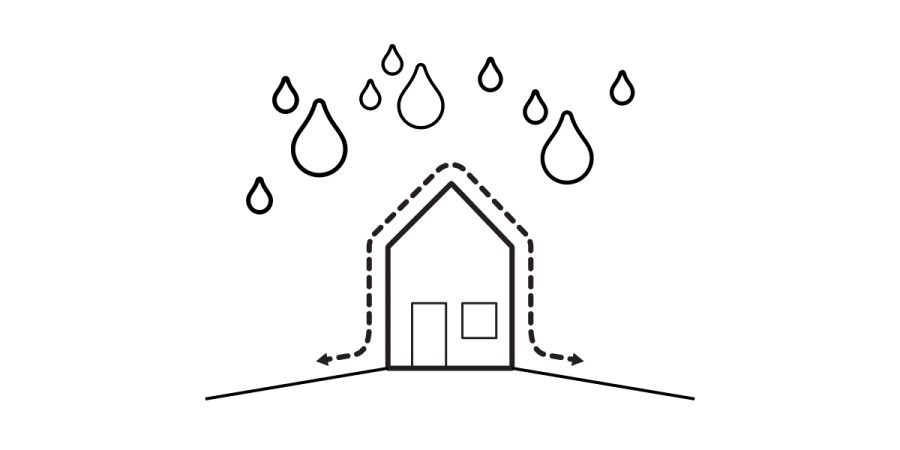
A simple black outline of a house with dashed lines around it, surrounded by raindrop shapes above. The raindrops do not touch the house, illustrating moisture barrier and moisture protection. Arrows at the base of the house point outward.

Staying dry and protected from the elements is a fundamental architectural principle. Buildings must effectively manage water and temperature transmission, addressing moisture from precipitation and groundwater. A comprehensive approach involves positive drainage, continuous waterproof membranes, and strategic placement of building functions above the water table. Understanding the nuances of moisture prevention, thermal insulation, and various waterproofing applications is crucial for designing resilient structures that effectively control heat flow and resist water penetration, ensuring long-term building integrity.

Vapor Retarders & Air Barriers

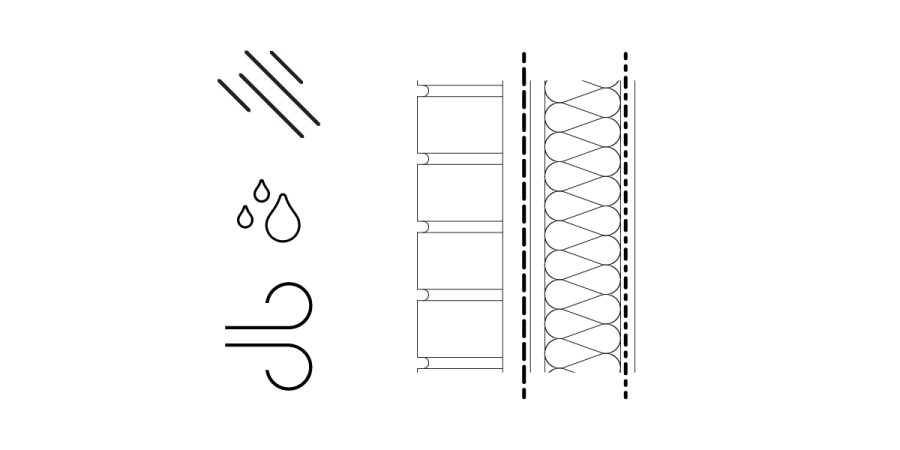
A diagram showing three diagonal lines, three water droplets, and a wind symbol on the left—illustrating air barriers and vapor retarders—with a cross-section of layered materials and two dashed lines on the right.

Water exists as solid, liquid, and gas, with vapor being a significant concern for buildings. Humidity affects comfort and moisture levels can lead to issues like mold. Proper placement of vapor retarders and air barriers is crucial to manage water vapor and prevent condensation and related problems within building cavities.

Flooding, Floodproofing, & The Water Cycle

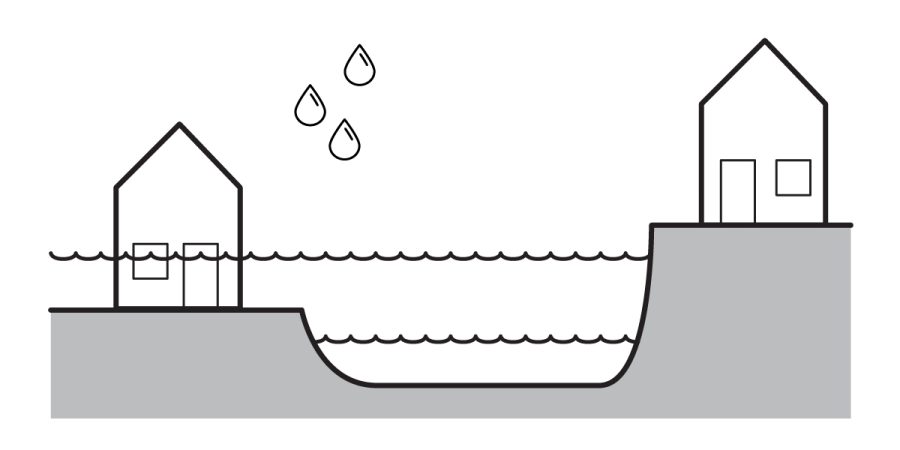
A simple line drawing shows two houses on different elevations; the lower house is flooded with water reaching its windows, while the higher house remains dry—highlighting the impact of flooding. Three raindrop icons appear above the flooded house.

Building in flood zones presents significant challenges, yet proactive design and management can mitigate risks. Understanding flood zones, distinguishing between 100-year and 1,000-year flood probabilities, and implementing robust stormwater management strategies are crucial. From detention ponds to dry or wet floodproofing, effective solutions exist to safeguard structures. Prioritizing site placement and integrating water-resistant materials are key for resilient architecture in vulnerable areas.

Water Treatment

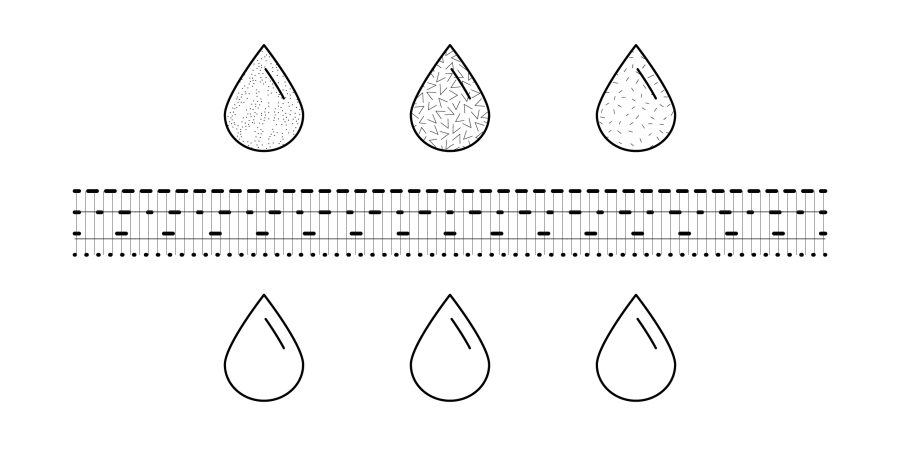
Three patterned water droplets above a horizontal barrier representing a membrane, and three plain water droplets below—illustrating solar heating in water treatment—are all evenly spaced on a white background.

Water is essential for life, and ensuring its health and safety is paramount, especially in developed nations where it's often taken for granted. Beyond basic health, optimizing water quality involves considering factors like pH, chemistry, and mineral content. This exploration delves into various water factors and issues, from acidity and hardness to biological contaminants, and outlines the critical treatment methods—pre-treatment, filtration, demineralization, and disinfection—necessary for elevating water from merely healthy to truly optimal.

Fire Sprinklers

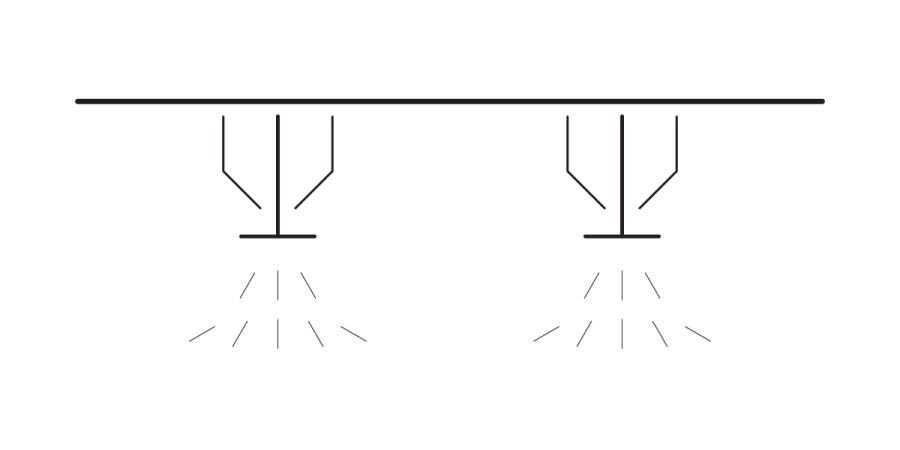
A simple black and white line drawing shows two ceiling-mounted fire sprinklers releasing water downward, depicted by angled lines spreading from each fire sprinkler head.

Understanding fire sprinkler systems is crucial for architectural professionals. This guide details different sprinkler types—wet, dry, pre-action, and deluge—along with various sprinkler heads like upright, sidewall, and pendant. It also covers the benefits, such as reduced insurance premiums and code trade-offs, and how NFPA classifications determine system requirements, providing essential knowledge for designing safer buildings.