Back in beta! Stay tuned.

wood

Engineered Wood Systems
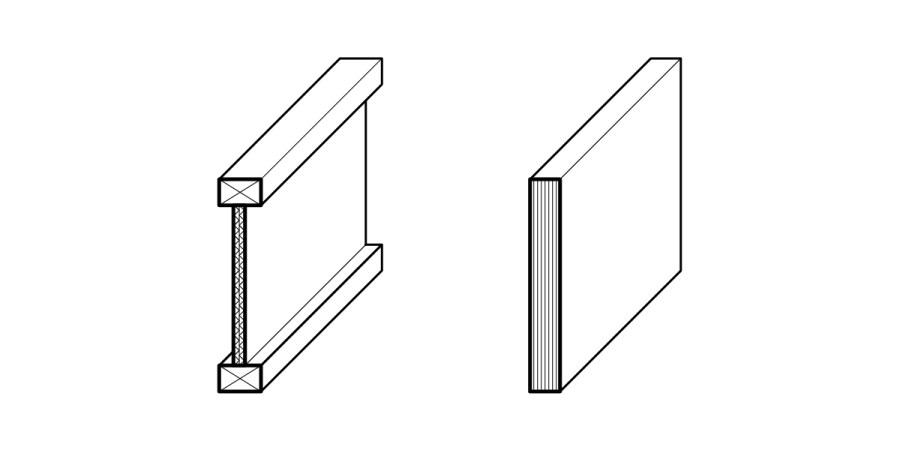
A line drawing shows two objects: on the left, a rectangular frame with a diagonal crisscross pattern inside, and on the right, a solid rectangular panel with visible layers. Both are oriented vertically.

Engineered wood systems are transforming construction with products designed for superior durability, stability, and predictable performance over traditional solid wood. By efficiently binding wood fibers and combining them with materials like adhesives, metal, or plastic, these systems offer a sustainable and cost-effective alternative. From Mass Timber and Structural Composite Lumber (SCL) families like LVL and PSL, to Wood Trusses and I-Joists, engineered wood provides consistent strength, accurate span capabilities, and better use of natural resources for modern architectural applications.
Heavy Timber

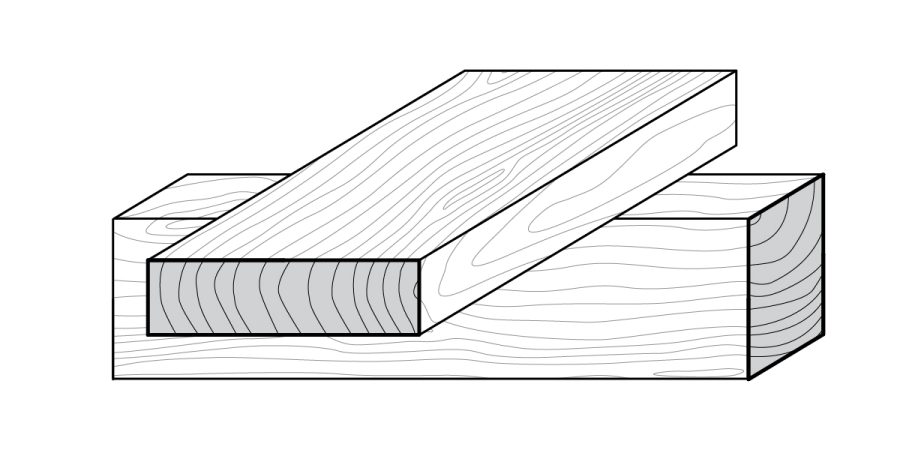
Heavy timber construction involves large solid timbers used for columns, beams, and planking, often combined with noncombustible materials for walls. Though one of the oldest building types in the U.S., heavy timber is largely being replaced by engineered mass timber due to cost and resource limitations. Both have distinct characteristics.

Wood Framing & Sheathing Materials

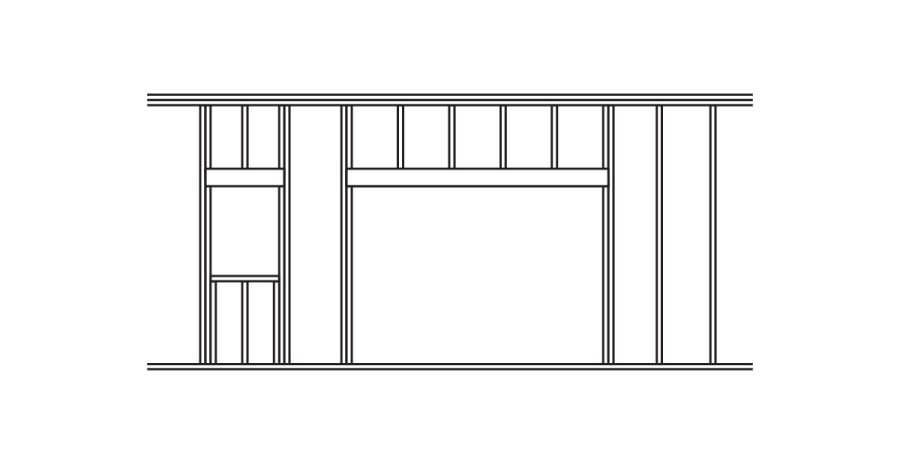
Black and white line drawing of a wood framing wall with studs, a large central opening, and smaller framed sections on the left side. Horizontal and vertical lines indicate the structure for sheathing materials.

The content outlines various wood and framing terms, distinguishing between wood, lumber, and timber. It details light and heavy timber constructions, different framing types like balloon and platform framing, and explains structural components such as openings, firestops, sheathing, plywood, and engineered panels like OSB and MDF.

Mass Timber

Mass Timber (MT) has rapidly evolved from a niche product to a mainstream construction option, driven by exponential growth since 2010. This engineered wood system offers precise manufacturing with CNC technology, leading to tight tolerances and faster on-site construction. Beyond its efficiency, MT buildings boast impressive fire resistance through charring and significant carbon sequestration. Understanding its diverse panel and beam products, along with key considerations like MEP coordination and acoustics, is crucial for successful integration.

Daisugi

A simple black and white line drawing of a large tree with a thick trunk and wide canopy. Several smaller cloud-shaped figures are positioned above and behind it, each connected to the canopy by thin vertical lines.

Daisugi, a centuries-old Japanese forestry technique yielding high-quality, knot-free lumber from a single tree without felling it entirely. Developed in the 14th century for Sukiya-zukuri architecture, this sustainable method produces incredibly straight and strong wood, ideal for precise structural elements. Learn how this visually stunning practice continues to offer efficient and eco-friendly solutions for modern design.

Finish Wood & Carpentry

A black and white diagram of a tree trunk cross-section, often referenced in carpentry, shows annual growth rings and rough outer bark, with two arrows pointing to specific rings and bark layers—key details for understanding finish wood selection.

Understanding the nuances of finish carpentry and architectural woodwork is crucial for precise design and specification. This guide delves into key definitions, differentiating between site-built and factory-fabricated wood components. It also explores wood species grading, distinguishing between heartwood and sapwood, and introduces finger-jointed lumber. Additionally, we examine how various sawing methods influence grain patterns and material availability, providing essential insights for architects and designers.

Hardwood & Softwood – Wood Types

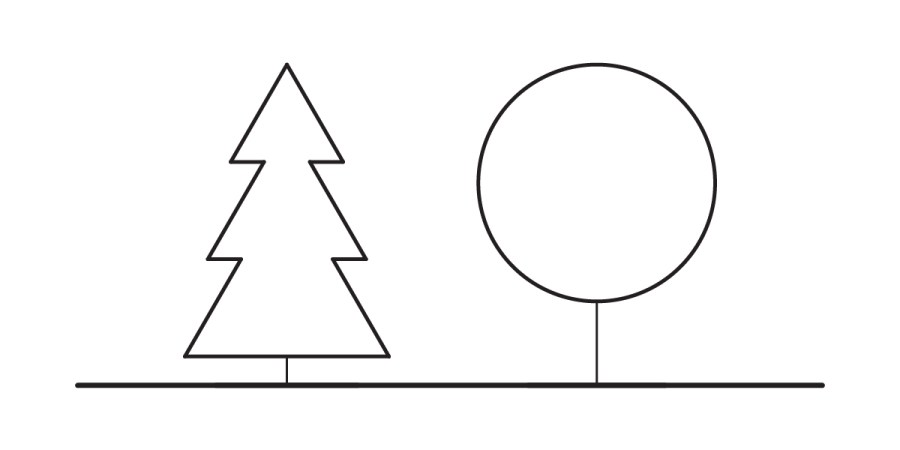
A simple line drawing of two trees on a horizontal line; the left tree, shaped like a triangle, suggests softwood, while the right tree’s circular form hints at hardwood or other wood types.

Explore the fundamental distinctions between hardwood and softwood, crucial for architectural projects. This guide delves into definitions of wood, lumber, and timber, clarifying their uses in rough and finish carpentry. Understand how properties, grading, and classifications influence material selection, from structural applications to aesthetically driven finishes. Learn about common wood defects and their impact on strength and appearance.

Hardwood & Softwood Charts

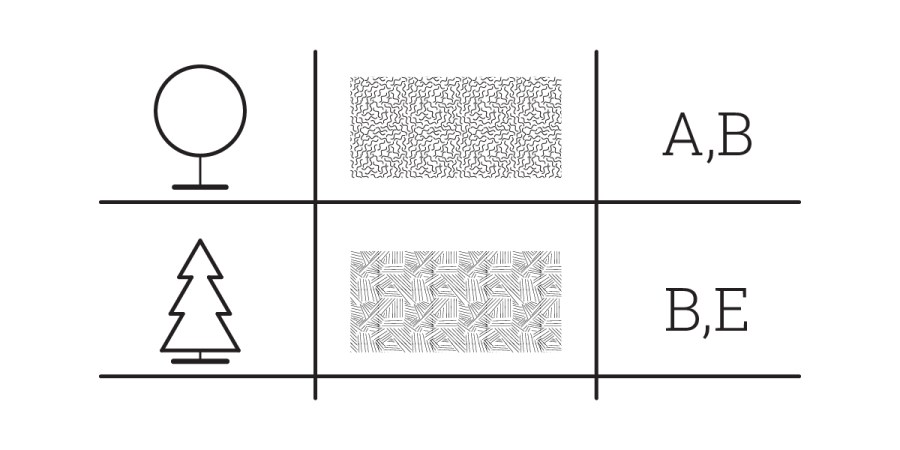
A table with two rows and three columns. The first row shows a globe, a wavy pattern, and the text “A, B.” The second row features a pine tree for softwood, a geometric line pattern, and the text “B, E.” Perfect for visual charts.

Understanding wood characteristics is crucial for architectural design. This comprehensive chart details various hardwoods and softwoods, outlining their scientific names, common variations, and key properties. From the durable strength of Oak for flooring to the aromatic decay resistance of Cedar for outdoor applications, this guide helps professionals select the ideal wood type for specific structural and aesthetic requirements, acknowledging that properties can vary based on species and processing.

Lumber Sizes

Three rectangular prisms of increasing sizes are drawn in black outline. Each prism, resembling stacked lumber, features diagonals connecting the corners of their front and back faces, forming an X shape on each end.

Understanding lumber sizes is crucial for accurate architectural design and construction. While nominal dimensions (like 2x4) are commonly used, the actual size of dried lumber differs due to moisture evaporation. This reduction is consistent, not a percentage, meaning larger pieces also shrink similarly. This guide clarifies the distinction between nominal and actual lumber dimensions, providing essential information for professionals to ensure precise material specification and avoid common pitfalls.