Back in beta! Stay tuned.

Blog

2025 Site Update & Future
A black and white icon shows three stacked server units with a triangular warning sign in front, signaling a server error—ideal for illustrating alerts during a 2025 site update or issues impacting future website functionality.

Archoverflow is back online after a significant 6-month overhaul, now hosted on WordPress.com for greater stability. The relaunch introduces a membership model, ensuring a viable economic future and a superior, ad-free user experience without watermarks, while also combating content porting. We are expanding resources to cover the Architectural Registration Exam (ARE) and planning a detail library, reinforcing our role as a trusted community resource for Architects and Designers.
2025 Holiday Gift Buying Guide : For Architect & Student

Mass Timber (MT) has rapidly evolved from a niche product to a mainstream construction option, driven by exponential growth since 2010. This engineered wood system offers precise manufacturing with CNC technology, leading to tight tolerances and faster on-site construction. Beyond its efficiency, MT buildings boast impressive fire resistance through charring and significant carbon sequestration. Understanding its diverse panel and beam products, along with key considerations like MEP coordination and acoustics, is crucial for successful integration.

Dear Walmart; Don’t Forget to Turn Off the Lights (Case Study)

Two abstract flower-like shapes are shown side by side on a white background, reminiscent of lights. The left shape is filled in black, while the right has a black circular center and outlined petals. Both have six petals.

This theoretical exercise evaluates the significant value of building commissioning by examining energy and monetary savings at a local Walmart. Despite being a multi-billion dollar company, the persistent issue of parking lot lights remaining on during daylight hours highlights overlooked inefficiencies. While the direct financial cost is a mere "rounding error" for Walmart, the substantial energy waste—equivalent to the annual electricity use of over 4,200 homes—underscores a critical environmental concern for companies committed to sustainability.

Daisugi

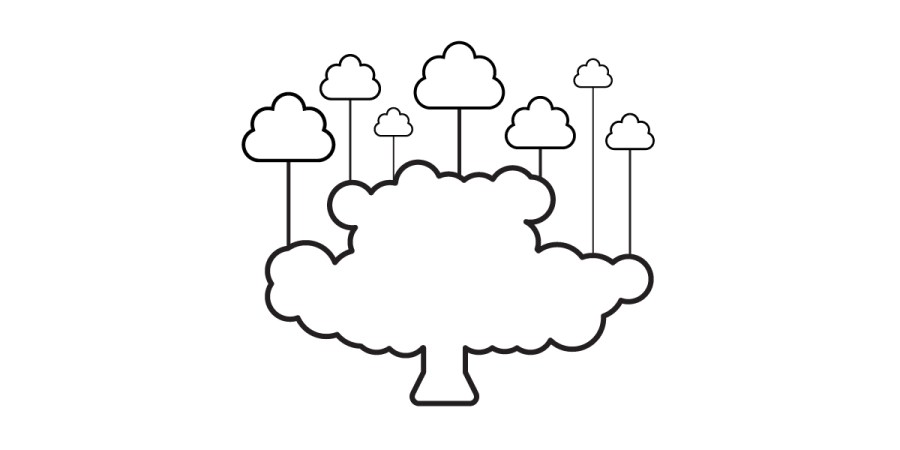
A simple black and white line drawing of a large tree with a thick trunk and wide canopy. Several smaller cloud-shaped figures are positioned above and behind it, each connected to the canopy by thin vertical lines.

Daisugi, a centuries-old Japanese forestry technique yielding high-quality, knot-free lumber from a single tree without felling it entirely. Developed in the 14th century for Sukiya-zukuri architecture, this sustainable method produces incredibly straight and strong wood, ideal for precise structural elements. Learn how this visually stunning practice continues to offer efficient and eco-friendly solutions for modern design.

Doors to Nowhere

A stick figure falls sideways in mid-air between two closed doors—one on the ground and one above—against a white background, as if exploring Doors to Nowhere.

"Doors to Nowhere" delves into the intriguing world of seemingly non-functional architectural elements. From historical preservation to ingenious utility concealment, these doors exist for diverse reasons beyond simple access. Explore how aesthetic charm, structural practicality in older buildings, and even theatrical needs contribute to their presence, offering insights into their often-overlooked significance in design and construction.

Electrical Outlet; Which Orientation Is Correct?

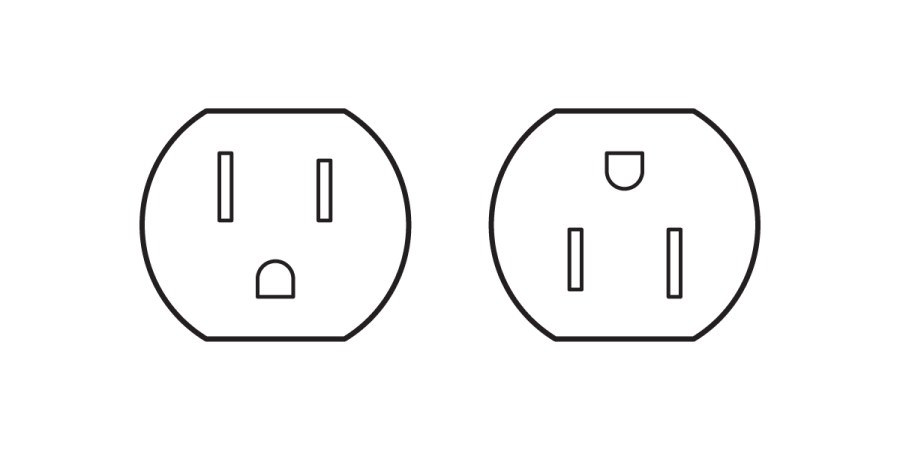
A simple black line drawing of two different electrical outlet types side by side on a white background; each outlet shows three prong slots with distinct configurations, illustrating correct electrical outlet position.

The orientation of electrical outlets, specifically the three-prong ground, often sparks debate. While functionality remains unaffected whether the ground is up or down, historical patents, such as US2872654A, indicate the inventor's original intention for the grounding plug to be positioned on top. However, common practice frequently shows outlets installed with the ground at the bottom, a phenomenon potentially influenced by pareidolia and the visual appeal of a "smiley face" configuration.