Back in beta! Stay tuned.
admin

admin

CSI MasterFormat Specifications

The image shows the word SPEC in large bold letters above three pairs of number signs (## ## ##), each pair enclosed in a dashed box, referencing Specifications or the CSI MasterFormat numbering system.

The CSI MasterFormat is an essential tool for organizing construction specifications in the U.S. Its standardized 6-digit division system, covering everything from existing conditions to specialized equipment, ensures clarity and reduces errors. Professionals benefit from its established framework, preventing gaps and overlaps, and simplifying product specification with manufacturer-provided formats. This consistent layout streamlines project documentation across all construction industries.

Slopes & Ramps

A series of nine horizontal black lines with varying angles and spacings, some solid and some dashed, are arranged on a white background. The lines become increasingly slanted from top to bottom, resembling a set of abstract slopes.

Understanding slopes and ramps is crucial for architectural design and construction. This comprehensive guide details nominal and actual dimensions for common lumber sizes, essential for accurate planning. We also delve into critical slope principles, including pitch, percentages, and degrees, alongside practical rules of thumb for drainage and unpaved surfaces. Ensure your projects meet both aesthetic and functional requirements with precise slope calculations.

Roofing Types & Info

A black and white line drawing of overlapping arches arranged in two horizontal rows, creating a repeating geometric pattern against a white background.

Understanding diverse roofing systems is crucial for architectural success. From traditional shingles and durable tiles to advanced membrane options and metal solutions, each type offers unique advantages in terms of material, installation, and performance. This comprehensive guide delves into various roof types, highlighting key considerations like slope, ponding prevention, material properties, and essential accessory components, ensuring informed decisions for lasting structural integrity.

Lumber Sizes

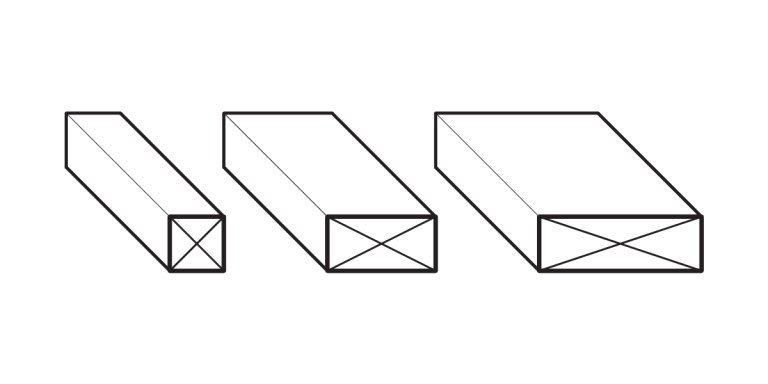
Three rectangular prisms of increasing sizes are drawn in black outline. Each prism, resembling stacked lumber, features diagonals connecting the corners of their front and back faces, forming an X shape on each end.

Understanding lumber sizes is crucial for accurate architectural design and construction. While nominal dimensions (like 2x4) are commonly used, the actual size of dried lumber differs due to moisture evaporation. This reduction is consistent, not a percentage, meaning larger pieces also shrink similarly. This guide clarifies the distinction between nominal and actual lumber dimensions, providing essential information for professionals to ensure precise material specification and avoid common pitfalls.