Back in beta! Stay tuned.
admin

admin

Weather & Site Design
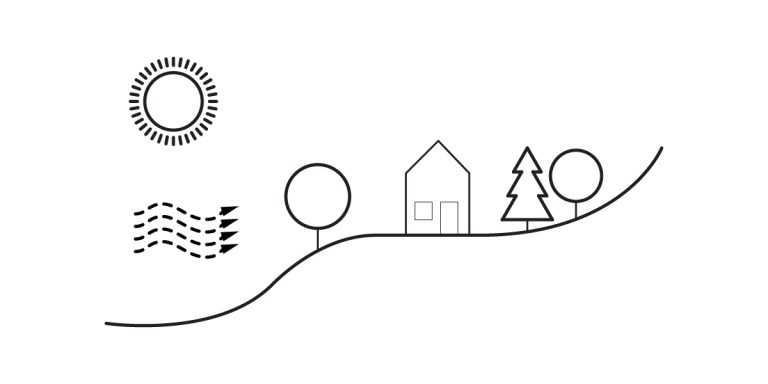
A simple line drawing illustrating thoughtful site design—a sun, wavy lines for weather elements like water or wind, two round trees, a house, a pine tree, and a curved hill.

Effective site design begins with allowing the local climate and context to fundamentally influence a building's form, transcending the reliance on active mechanical systems. Best practices necessitate heeding cardinal directions, solar exposure, and wind dynamics. Furthermore, thoughtful site plantings function beyond aesthetics, offering significant energy conservation and microclimate moderation. Mastering the interplay of topography, material albedo, and wind patterns is crucial for creating sustainable and site-responsive architecture.

Engineered Wood Systems

A line drawing shows two objects: on the left, a rectangular frame with a diagonal crisscross pattern inside, and on the right, a solid rectangular panel with visible layers. Both are oriented vertically.

Engineered wood systems are transforming construction with products designed for superior durability, stability, and predictable performance over traditional solid wood. By efficiently binding wood fibers and combining them with materials like adhesives, metal, or plastic, these systems offer a sustainable and cost-effective alternative. From Mass Timber and Structural Composite Lumber (SCL) families like LVL and PSL, to Wood Trusses and I-Joists, engineered wood provides consistent strength, accurate span capabilities, and better use of natural resources for modern architectural applications.

Curtain Wall Systems

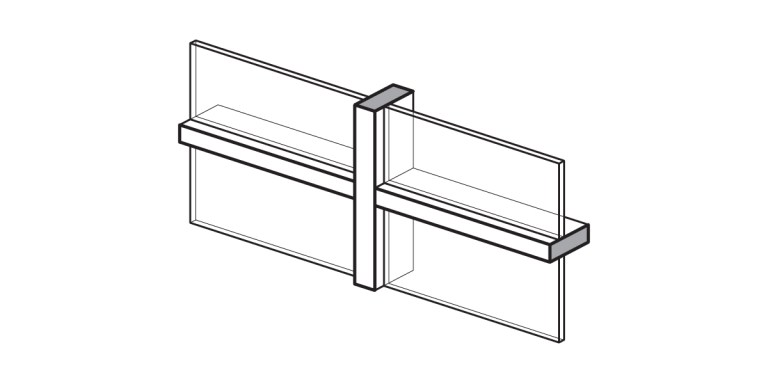
Isometric drawing of two glass panels joined at a perpendicular angle by a central rectangular connector, illustrating a structural glazing detail.

Curtain walls are exterior systems that elegantly manage a building’s dead and wind loads by hanging off the main structure. Architects often choose between two main design levels: custom systems tailored for specific projects or standard catalog components for typical applications. Furthermore, assembly methods divide into site-assembled stick systems, which suit unique conditions, and the factory-built unitized systems, favored for high-rises due to their efficiency and controlled manufacturing environment.

Water System Design

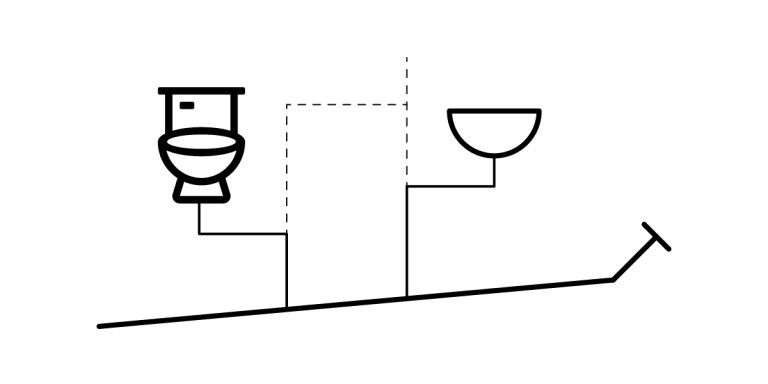
A simple line drawing shows a toilet and a sink on different levels, both connected by lines to an angled pipe that slopes downward, indicating a plumbing or drainage system.

Effective water system design is paramount in architecture, balancing minimum pressure requirements at remote fixtures with pipe sizing for probable demand, as determined by Water Supply Fixture Units (WSFU). A comprehensive design addresses potential friction loss, pipe noise, and thermal expansion. Furthermore, the system must incorporate efficient sanitary drainage, utilizing Drainage Fixture Units (DFU), proper slope, and necessary venting, while also accounting for essential components like various valves, traps, and backflow preventers to ensure safety and functionality.

Environmental Product Declarations

A simple black outline of a clipboard with the bold, uppercase letters EPD centered on the board, symbolizing Environmental Product Declarations, set against a plain white background.

Environmental Product Declarations (EPDs) are increasingly vital tools for transparency in building product specification, detailing a product's environmental impact throughout its lifecycle. Based on a Life Cycle Assessment (LCA) and third-party verified, EPDs are governed by Product Category Rules (PCRs) to ensure accurate comparison between products. Architects should note the distinction between Industry-wide EPDs, which cover generic product types, and Product Specific EPDs, which offer greater contributions toward sustainable building credits.

2025 Site Update & Future

A black and white icon shows three stacked server units with a triangular warning sign in front, signaling a server error—ideal for illustrating alerts during a 2025 site update or issues impacting future website functionality.

Archoverflow is back online after a significant 6-month overhaul, now hosted on WordPress.com for greater stability. The relaunch introduces a membership model, ensuring a viable economic future and a superior, ad-free user experience without watermarks, while also combating content porting. We are expanding resources to cover the Architectural Registration Exam (ARE) and planning a detail library, reinforcing our role as a trusted community resource for Architects and Designers.

Indoor Air Quality (IAQ)

Three envelope icons are shown in a row. The first two, marked with a check for good IAQ, contrast with the third, which features a skull symbol to highlight poor Indoor Air Quality.

Indoor Air Quality (IAQ) is paramount in building design, directly impacting occupant health, productivity, and a building's habitability. Modern, tighter construction, while energy efficient, exacerbates IAQ challenges by reducing fresh air infiltration. Architects must proactively implement a multi-faceted approach, focusing on eliminating pollution sources, meticulous moisture control, optimized ventilation systems, appropriate filtration (including HEPA), and selecting low-VOC materials and sustainable finishes to ensure a healthy indoor environment.

Water Supply

A simple black and white illustration of a water tower with a cylindrical tank on a lattice framework next to a large faucet with a valve handle, both positioned on a flat horizontal line.

Effective water supply design is a critical component of modern architecture, spanning from municipal mains to fixture performance. Professionals must navigate various system types, including Upfeed and Downfeed, considering factors like static pressure head and vertical limitations. Material choices are equally vital; the document details copper grades (K, L, M) and the benefits and jurisdictional resistance associated with PEX piping. Understanding these components ensures longevity and efficiency in a structure's essential services.

Sustainable Product & Building Programs

A simple black outline of a trophy cup with a ribbon or award badge attached to its right side, symbolizing achievement in sustainable building programs, set against a plain white background.

The contemporary architecture and construction landscape is defined by a growing commitment to sustainability, necessitating a comprehensive understanding of third-party certifications. From whole-building standards like LEED and WELL to product-specific ratings such as Cradle to Cradle and Green Seal, these programs provide a crucial, non-mandatory framework for evaluating environmental design, material sourcing, and long-term performance. Architects must navigate this evolving list to ensure projects meet rigorous environmental and occupant-health benchmarks beyond local codes.

Solar Water Heating

A simple illustration showing solar water heating: the sun shining, wavy lines representing heat moving down to water, and icons of a rising arrow and thermometer indicating increasing temperature.

Solar water heating offers a sustainable approach to energy, harnessing the sun's power to reduce reliance on mechanical systems. Various types exist, including batch, thermosiphon, closed-loop active, drain-down, drain-back, and phase change systems, each with unique operational characteristics and considerations for efficiency, freezing protection, and installation. Understanding these diverse system connections, from direct to indirect and passive to active circulation, is crucial for integrating solar water heating effectively into building designs, optimizing for both performance and cost.