Back in beta! Stay tuned.
admin

admin

General Use Abbreviations
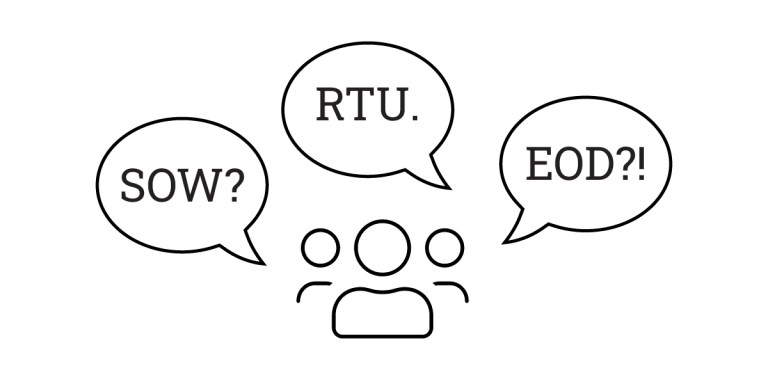
Three simple human figures with speech bubbles above them display SOW?, RTU., and EOD?!—common drawing set abbreviations often seen as construction abbreviations or workplace jargon.

Navigating the world of architectural and construction abbreviations can be tricky, especially when deciphering casual communications like emails or on-site meeting discussions. Our "Miscellaneous Abbreviations" resource provides a concise, ready-reference list to help clarify common industry acronyms. This evolving compilation is designed to be a practical tool, ensuring you're always in the know, even when industry jargon gets dense.

Color

A circular diagram divided into ten equal segments, each shaded in varying tones of gray from light to dark, arranged in a gradient around the ring.

Color fundamentally shapes our perception of architectural spaces, influencing mood and functionality. This excerpt delves into how light quality, cultural contexts, and even branding impact color's appearance. Understanding the distinctions between additive and subtractive colors, the nuances of hue, value, and intensity, and the dynamics of complementary colors are essential for architects to strategically employ color in creating impactful and effective environments.

Programming & Space Needs

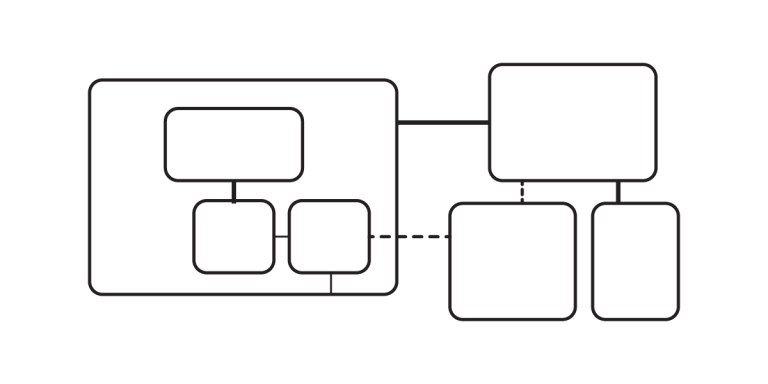
A simple black-and-white flowchart with six rectangular boxes, some connected by solid lines and others by dashed lines, illustrates programming processes, with one group of boxes enclosed in a larger rectangle.

Architectural programming is a critical early-stage process for identifying and organizing all project criteria—functional, aesthetic, structural, and budgetary—to guide design decisions. Effective programming, which focuses on problem identification rather than premature design, involves thorough documentation, client reviews, and research into typologies and similar facilities. This meticulous approach ensures a comprehensive understanding of project requirements, leading to more responsive buildings and minimizing costly changes during later design and construction phases.

Photovoltaics (Solar Panels)

A simple line drawing showing a sun—representing solar panels—on the left and three battery icons on the right, each with charging bars displayed inside.

Photovoltaic systems (PVs) convert sunlight into electricity, utilizing semiconductor materials that generate DC electricity, which is then transformed into AC. PVs can be arrayed or integrated into structures and must comply with safety codes. They offer renewable energy benefits, but have high initial costs and require favorable locations for efficiency.

Heavy Timber

Heavy timber construction involves large solid timbers used for columns, beams, and planking, often combined with noncombustible materials for walls. Though one of the oldest building types in the U.S., heavy timber is largely being replaced by engineered mass timber due to cost and resource limitations. Both have distinct characteristics.

Security and Communication Systems

A simple line drawing shows a person running toward a ringing alarm clock with an exclamation mark in the center, emphasizing urgency—ideal for illustrating alerts in security or communication systems.

This content discusses communication systems, focusing on the differences between Local Area Networks (LAN) and Wide Area Networks (WAN). It explains terminal rooms, Building Automation Systems (BAS), security systems, access control methods, and site security strategies. The importance of balancing security with aesthetics while minimizing risk is emphasized throughout.

Value Engineering (VE)

black and white line drawing showing an arrow going down from left to right with smaller money symbols indicating saving money

Value Engineering (VE) is a cost-reduction approach applied during project design phases to explore less expensive or higher-quality materials. Effective budget refinement methods include Parameter Method, Matrix Costing, and Unit Cost Method. These techniques help identify cost savings while maintaining functionality, ultimately ensuring more efficient project management and execution.

The Ahwahnee Principles

black and white line drawing showing a bear with conversation bubbles, symbolizing the discussions at the ahwahnee hotel

The Ahwahnee Principles, established in 1991, advocate for sustainable urban and suburban planning to combat pollution, car dependency, and loss of open space. These principles emphasize integrated communities with diverse housing, walkable access to amenities and transit, and a strong civic core. They also promote regional land-use integration, greenbelt protection, and resource conservation through thoughtful community design and updated planning practices. This framework remains crucial for architects and planners aiming for environmentally conscious development.

Materials Sustainability Overview

A black line drawing of a circular arrow on the left and a hand holding a sprouting plant on the right symbolizes materials sustainability, all set against a white background.

As architects increasingly balance cost, function, time, and aesthetics, sustainability has become a critical design aspect. Beyond mere marketing, a true understanding of sustainability must permeate all project decisions. Evaluating building materials involves quantifying embodied energy, prioritizing renewable and recycled content, considering local sourcing, assessing material toxicity, and ensuring durability, maintainability, and recyclability. These criteria guide the selection of materials like concrete, masonry, steel, wood, and plastics, each with unique advantages and disadvantages for sustainable construction.

Glare & Contrast

Two simple black line drawings create a striking contrast: on the left, a sun-like circle with radiating lines; on the right, a star-shaped figure with intersecting lines and rays, giving a sense of glare. Both are set against a white background.

Glare and contrast are critical considerations in architectural design, significantly impacting occupant comfort and visual clarity. While natural sunlight is highly valued, excessive light can lead to discomfort and interfere with tasks. Understanding the nuances of direct and reflected glare, along with appropriate brightness ratios and lighting uniformity, is essential for creating functional and aesthetically pleasing spaces that prioritize visual well-being.