Back in beta! Stay tuned.
admin

admin

Site Design & Layout, Streets, Utilities
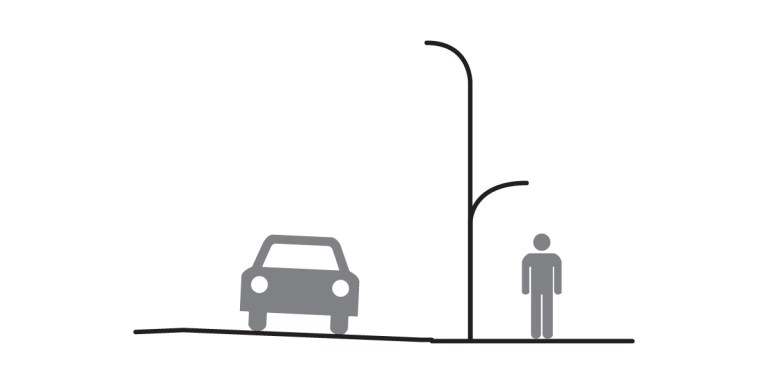
A simple illustration showing a car on a road next to a sidewalk, featuring thoughtful site design with a streetlight and a person standing on the sidewalk.

Site layout planning is crucial for any land parcel's usefulness, requiring adequate circulation access and utility services like water, sewer, gas, electricity, and communication systems. Key considerations include road design, pedestrian circulation, and strategic placement of utilities to ensure seamless community access and functionality. Careful planning, from street widths to utility trunk lines, is essential for efficient and sustainable development.

Land Zoning & Variances

A grid with thick black lines divides patterned sections, evoking land zoning maps. Three large black letters, R, C, and I, each centered in different sections with distinct textures and dashed or dotted lines.

Zoning ordinances are fundamental to land use, evolving from simply deterring poor development to actively promoting good design. They dictate building types, sizes, and density, while incorporating incentives for sustainability and affordable housing. Key concepts like FAR, setbacks, and various building development ordinances ensure responsible urban planning, balancing public welfare with property rights. Understanding these regulations is crucial for any architectural professional.

Construction Types & Allowable Area

Two vertical bars of different heights, representing varying Construction Types, are shown side by side. Each bar has a dashed line from its top, with a double-headed arrow indicating the Allowable Area for each type.

Understanding a building's construction type and occupancy group is crucial for determining its allowable area and height, as outlined by the IBC. These classifications dictate fire resistance and structural integrity, ensuring safety during an emergency. Factors like fire zones, sprinkler systems, and building frontage also play a significant role in establishing the maximum permissible size, emphasizing the interconnectedness of safety regulations in architectural design.

Dear Walmart; Don’t Forget to Turn Off the Lights (Case Study)

Two abstract flower-like shapes are shown side by side on a white background, reminiscent of lights. The left shape is filled in black, while the right has a black circular center and outlined petals. Both have six petals.

This theoretical exercise evaluates the significant value of building commissioning by examining energy and monetary savings at a local Walmart. Despite being a multi-billion dollar company, the persistent issue of parking lot lights remaining on during daylight hours highlights overlooked inefficiencies. While the direct financial cost is a mere "rounding error" for Walmart, the substantial energy waste—equivalent to the annual electricity use of over 4,200 homes—underscores a critical environmental concern for companies committed to sustainability.

Building Commissioning

A black line drawing of a bar chart is on the left and a black outline of a pie chart is on the right, both displayed on a white background—ideal for illustrating energy efficiency in building systems.

Building Commissioning ensures a building performs as intended by inspecting, testing, and verifying system performance against benchmarks. This critical process uncovers defects, optimizes equipment lifespan and ROI, and enhances operational efficiency through proper hand-offs to maintenance crews. While often overlooked due to initial costs and timing, the long-term benefits of commissioning—including verifying paid-for efficiency and ensuring LEED compliance—far outweigh minor project delays, making it a vital step in modern construction.

Structural Loads on Buildings

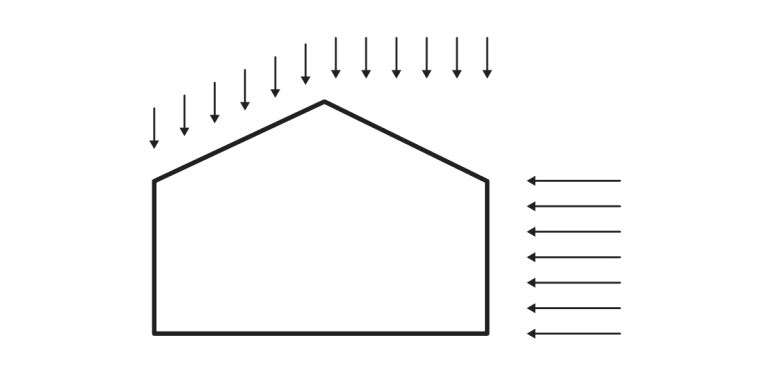
A simple outline of a house with arrows pointing downward above the roof and arrows to the right at the side, illustrating wind or airflow directions and the impact of building loads in structural engineering.

Understanding building loads is fundamental in architectural design and construction. These loads, derived from mathematical modeling and past experience, ensure safety and structural integrity. Building codes dictate minimum requirements for various loads, including static dead and live loads, as well as environmental factors like wind and snow. Designers must account for worst-case scenarios and concentrated loads, referencing code exceptions for potential reductions in loading.

Electricity

Two black outline icons of light bulbs on a white background; the bulb on the left is crossed out with a diagonal line, while the bulb on the right is not crossed out.

Understanding the fundamentals of electricity is essential for architectural professionals. This guide explores the core components of electric circuits, the advantages of underground power lines, and standard voltage applications for residential, commercial, and industrial projects. Delve into the differences between AC and DC current, essential circuitry, and key power quality considerations like UPS systems. Gain insights into secondary distribution, grounding, and critical wiring devices for effective building design.

Defensible Space

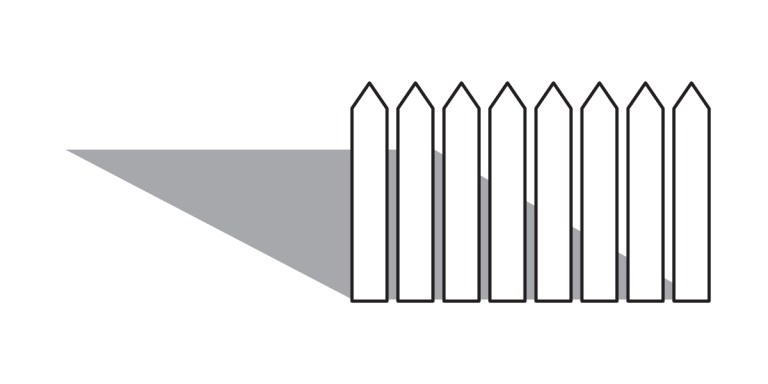
A vertical row of eight picket fence posts with pointed tops casts a solid, triangular shadow to the left on a white background, evoking concepts of defensible space in areas of high population density.

Oscar Newman's 1970s concept of Defensible Space emphasizes architectural design that empowers residents to control their surroundings, fostering a sense of ownership and promoting community safety. This principle suggests that spaces designed with clear territorial markers encourage neighbors to look out for one another, reducing reliance on external intervention. Modifications like gated streets and stricter code enforcement can further enhance this resident-driven security, leading to environments people actively maintain and protect.

LCCA Life Cycle Cost Assessment

A black dollar sign, an upward-trending zigzag arrow, and the letters LCAA in bold font on a white background, symbolizing cost assessment or Life Cycle Cost Assessment.

Understanding Life Cycle Cost Assessment (LCCA) is crucial for architects and design professionals. Unlike Life Cycle Assessment (LCA), which focuses on environmental impact, LCCA evaluates the total economic impact of a building or component throughout its lifespan. This includes initial costs, operations, maintenance, replacement, and financing. By considering these factors, LCCA allows for informed decisions that can lead to long-term cost savings and more efficient building designs.

LCA Life Cycle Assessment

A black outline of a globe surrounded by four curved arrows forming a circle, symbolizing Life Cycle Assessment (LCA), with the bold uppercase letters LCA to the right of the image, all set against a white background.

Understanding Life Cycle Assessment (LCA) is crucial for evaluating the environmental impact of building materials and products. Unlike Life Cycle Cost Assessment (LCCA), which focuses on economic costs, LCA considers everything from raw material extraction to disposal, including energy consumption and potential environmental effects like global warming. This comprehensive analysis, often part of LEED certification, compares a design against a base case to measure reductions in various environmental categories.