
Back in beta! Stay tuned.

facades

Curtain Wall Systems

Isometric drawing of two glass panels joined at a perpendicular angle by a central rectangular connector, illustrating a structural glazing detail.

Curtain walls are exterior systems that elegantly manage a building’s dead and wind loads by hanging off the main structure. Architects often choose between two main design levels: custom systems tailored for specific projects or standard catalog components for typical applications. Furthermore, assembly methods divide into site-assembled stick systems, which suit unique conditions, and the factory-built unitized systems, favored for high-rises due to their efficiency and controlled manufacturing environment.
Moisture Protection

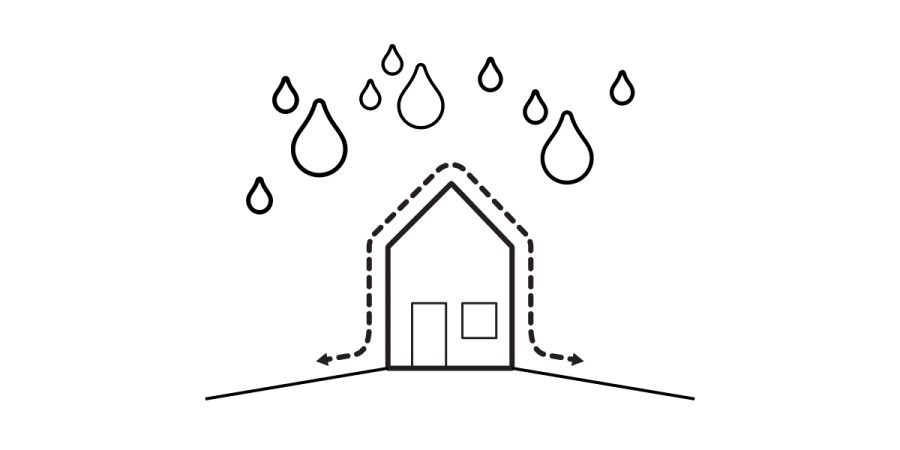
A simple black outline of a house with dashed lines around it, surrounded by raindrop shapes above. The raindrops do not touch the house, illustrating moisture barrier and moisture protection. Arrows at the base of the house point outward.

Staying dry and protected from the elements is a fundamental architectural principle. Buildings must effectively manage water and temperature transmission, addressing moisture from precipitation and groundwater. A comprehensive approach involves positive drainage, continuous waterproof membranes, and strategic placement of building functions above the water table. Understanding the nuances of moisture prevention, thermal insulation, and various waterproofing applications is crucial for designing resilient structures that effectively control heat flow and resist water penetration, ensuring long-term building integrity.

Barrier & Rainscreen Facade Systems

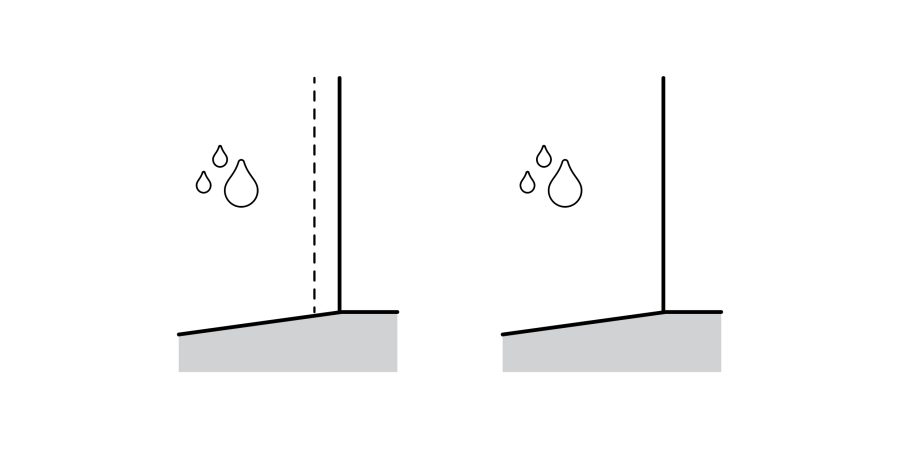
Two diagrams illustrate a water droplet near a sloped surface touching a vertical wall; the left highlights a contact point, common in Barrier Façade Systems, while the right, with no dashed line, is often seen in Rainscreen Façade Systems.

Understanding exterior wall assemblies is crucial in preventing water infiltration. Historically, the barrier concept aimed for a completely sealed exterior, which inevitably led to failures over time due to material breakdown and external elements. The modern rainscreen system, however, acknowledges that some water penetration is unavoidable. It incorporates an air space and watertight membrane, providing superior, long-term protection and reliability.