Back in beta! Stay tuned.

protection

Moisture Protection

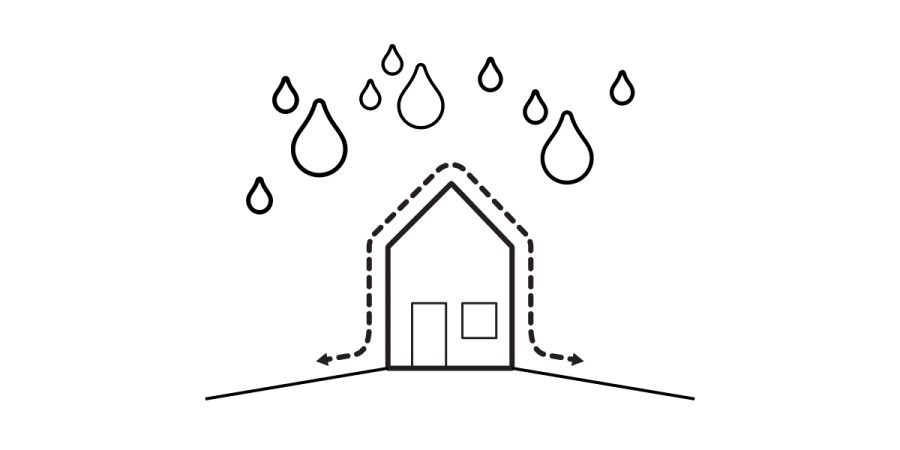
A simple black outline of a house with dashed lines around it, surrounded by raindrop shapes above. The raindrops do not touch the house, illustrating moisture barrier and moisture protection. Arrows at the base of the house point outward.

Staying dry and protected from the elements is a fundamental architectural principle. Buildings must effectively manage water and temperature transmission, addressing moisture from precipitation and groundwater. A comprehensive approach involves positive drainage, continuous waterproof membranes, and strategic placement of building functions above the water table. Understanding the nuances of moisture prevention, thermal insulation, and various waterproofing applications is crucial for designing resilient structures that effectively control heat flow and resist water penetration, ensuring long-term building integrity.
Vapor Retarders & Air Barriers

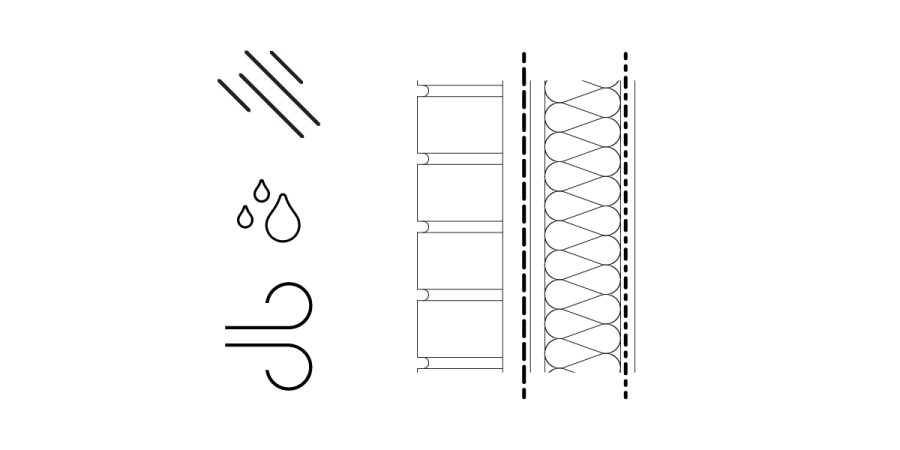
A diagram showing three diagonal lines, three water droplets, and a wind symbol on the left—illustrating air barriers and vapor retarders—with a cross-section of layered materials and two dashed lines on the right.

Water exists as solid, liquid, and gas, with vapor being a significant concern for buildings. Humidity affects comfort and moisture levels can lead to issues like mold. Proper placement of vapor retarders and air barriers is crucial to manage water vapor and prevent condensation and related problems within building cavities.