Back in beta! Stay tuned.

glazing

Curtain Wall Systems

Isometric drawing of two glass panels joined at a perpendicular angle by a central rectangular connector, illustrating a structural glazing detail.

Curtain walls are exterior systems that elegantly manage a building’s dead and wind loads by hanging off the main structure. Architects often choose between two main design levels: custom systems tailored for specific projects or standard catalog components for typical applications. Furthermore, assembly methods divide into site-assembled stick systems, which suit unique conditions, and the factory-built unitized systems, favored for high-rises due to their efficiency and controlled manufacturing environment.

Glass Energy And Performance

Diagram showing sunlight shining on a vertical tube, with wavy arrows indicating light and Glass Energy entering through the sides of the tube. The sun is depicted in the upper right corner.

Glass is a critical element in building design, offering benefits like natural light and views that positively impact well-being. However, it also presents challenges regarding heat loss and gain. Understanding energy measurements such as U-Value and Solar Heat Gain Coefficient (SHGC) is crucial for balancing efficiency with aesthetic considerations, ensuring optimal performance in different climates and reducing energy consumption.

Glazing Assemblies

Three closed books are standing upright in a row. The book on the left features a flame icon on its cover, while the other two resemble glass assemblies with plain covers and no additional markings.

Glass and glazing assemblies are critical components in architectural design, encompassing a range of definitions from glazier points and glazing tape to structural gaskets and frameless systems. Installation methods vary by manufacturer, with innovative solutions like spider systems offering unique aesthetic and structural possibilities. Building codes impose strict stipulations on glazing types and their applications, particularly concerning fire resistance and safety in areas prone to human impact, ensuring both structural integrity and occupant safety.

Glass & Glazing Types

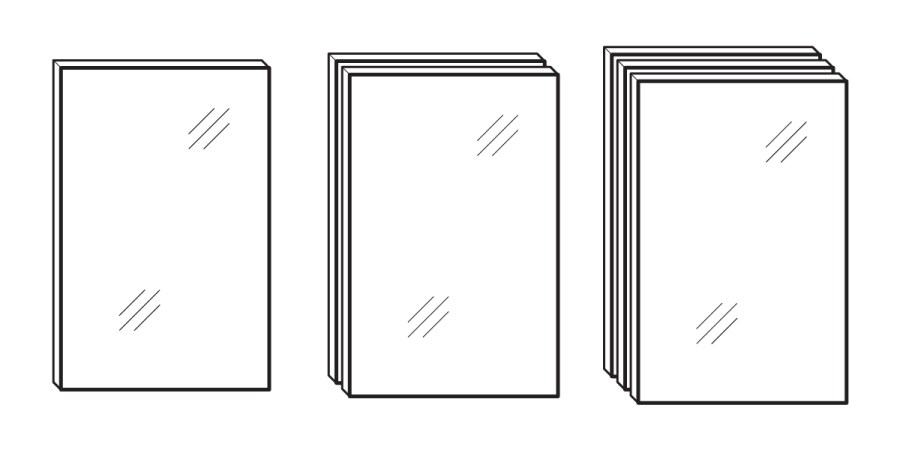
Three stacks of rectangular sheets illustrate various glass types: one sheet in the first stack, three in the second, and five in the third. Each sheet features two angled lines to suggest a reflective surface.

Understanding the diverse world of glass and glazing is crucial for architectural professionals. This comprehensive guide delves into various glass types, from the widely used float glass to specialized options like tempered, laminated, and low-emissivity glass. Explore definitions of key terms such as energy-efficient glazing and safety glass, and gain insights into how these materials contribute to building performance, aesthetics, and occupant comfort.