Back in beta! Stay tuned.

green

Sustainable Product & Building Programs
A simple black outline of a trophy cup with a ribbon or award badge attached to its right side, symbolizing achievement in sustainable building programs, set against a plain white background.

The contemporary architecture and construction landscape is defined by a growing commitment to sustainability, necessitating a comprehensive understanding of third-party certifications. From whole-building standards like LEED and WELL to product-specific ratings such as Cradle to Cradle and Green Seal, these programs provide a crucial, non-mandatory framework for evaluating environmental design, material sourcing, and long-term performance. Architects must navigate this evolving list to ensure projects meet rigorous environmental and occupant-health benchmarks beyond local codes.
Materials Sustainability Overview

A black line drawing of a circular arrow on the left and a hand holding a sprouting plant on the right symbolizes materials sustainability, all set against a white background.

As architects increasingly balance cost, function, time, and aesthetics, sustainability has become a critical design aspect. Beyond mere marketing, a true understanding of sustainability must permeate all project decisions. Evaluating building materials involves quantifying embodied energy, prioritizing renewable and recycled content, considering local sourcing, assessing material toxicity, and ensuring durability, maintainability, and recyclability. These criteria guide the selection of materials like concrete, masonry, steel, wood, and plastics, each with unique advantages and disadvantages for sustainable construction.

LCA Life Cycle Assessment

A black outline of a globe surrounded by four curved arrows forming a circle, symbolizing Life Cycle Assessment (LCA), with the bold uppercase letters LCA to the right of the image, all set against a white background.

Understanding Life Cycle Assessment (LCA) is crucial for evaluating the environmental impact of building materials and products. Unlike Life Cycle Cost Assessment (LCCA), which focuses on economic costs, LCA considers everything from raw material extraction to disposal, including energy consumption and potential environmental effects like global warming. This comprehensive analysis, often part of LEED certification, compares a design against a base case to measure reductions in various environmental categories.

Green Roofs & Earth Sheltered

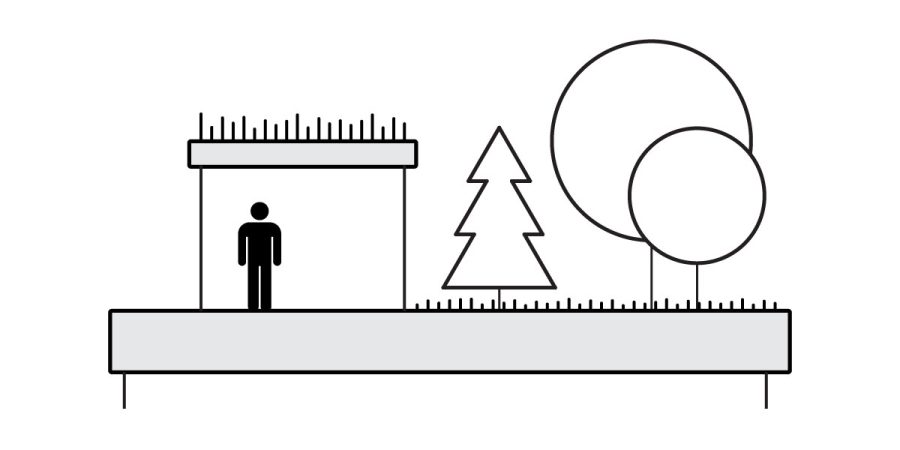
Earth sheltering is a construction method incorporating earth for thermal control, often involving partially buried homes. Benefits include temperature stability, soundproofing, and UV protection. Green roofs, designed for planting, offer ecological advantages and can improve aesthetics. There are extensive and intensive types, differing in soil depth and structural demands.