Back in beta! Stay tuned.

legal

Construction Overhead and Profit
A simple line graph with an upward trend is shown next to an outline of a generic person icon, indicating progress or growth related to Construction Management for an individual.

Understanding construction overhead and profit is crucial for any successful project. General contractors operate as businesses, with primary goals of profitability. This includes covering general operating costs (General Overhead) and project-specific expenses (Project Overhead), distinct from labor, materials, and equipment. Profit percentages vary widely based on project size, type, economic conditions, and associated risks, highlighting the dynamic nature of construction finance.
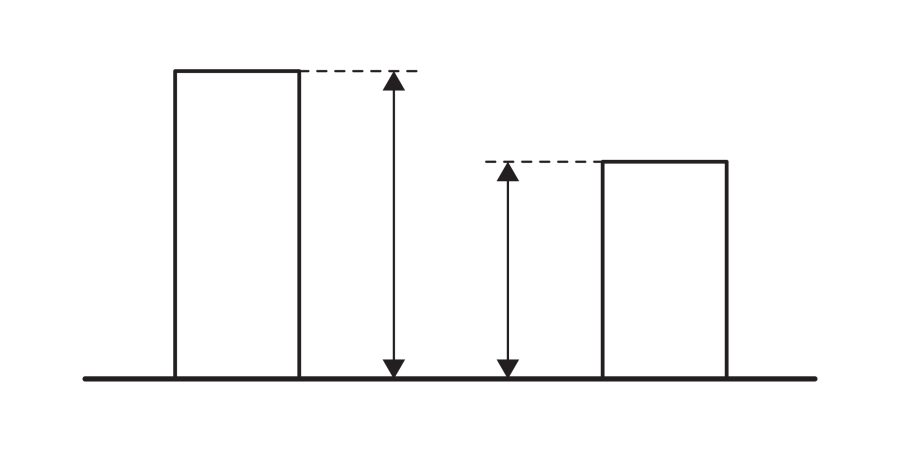
Construction Types & Allowable Area

Two vertical bars of different heights, representing varying Construction Types, are shown side by side. Each bar has a dashed line from its top, with a double-headed arrow indicating the Allowable Area for each type.

Understanding a building's construction type and occupancy group is crucial for determining its allowable area and height, as outlined by the IBC. These classifications dictate fire resistance and structural integrity, ensuring safety during an emergency. Factors like fire zones, sprinkler systems, and building frontage also play a significant role in establishing the maximum permissible size, emphasizing the interconnectedness of safety regulations in architectural design.

Covenants

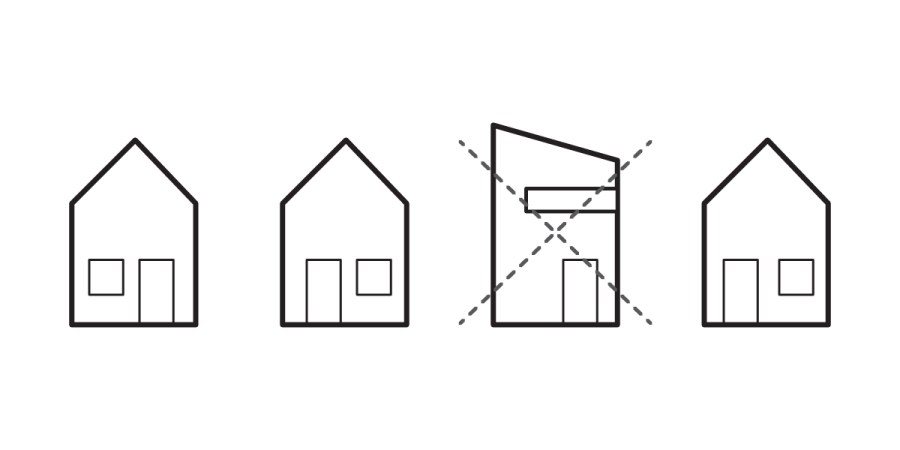
Four simple house outlines in a row; the third house has an angled roof and is divided by dashed diagonal lines, while the others have standard peaked roofs and doors and windows.

Covenants are legal agreements protecting specific land use conditions. More stringent than zoning, they ensure aesthetic harmony and quality in developments. From single-property restrictions to large-scale residential guidelines enforced by HOAs and Architectural Review Boards, covenants control aspects like building style, size, and design compatibility, although discriminatory clauses are illegal and unenforceable.