Back in beta! Stay tuned.

layout

Weather & Site Design
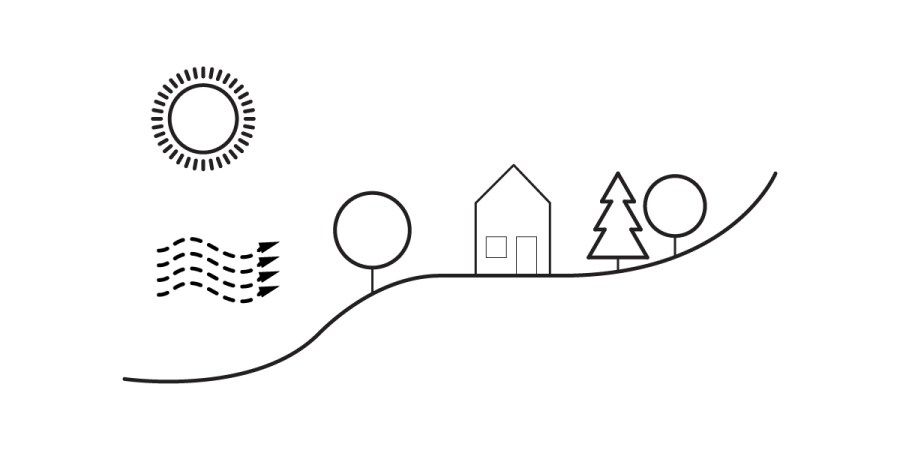
A simple line drawing illustrating thoughtful site design—a sun, wavy lines for weather elements like water or wind, two round trees, a house, a pine tree, and a curved hill.

Effective site design begins with allowing the local climate and context to fundamentally influence a building's form, transcending the reliance on active mechanical systems. Best practices necessitate heeding cardinal directions, solar exposure, and wind dynamics. Furthermore, thoughtful site plantings function beyond aesthetics, offering significant energy conservation and microclimate moderation. Mastering the interplay of topography, material albedo, and wind patterns is crucial for creating sustainable and site-responsive architecture.
Programming & Space Needs

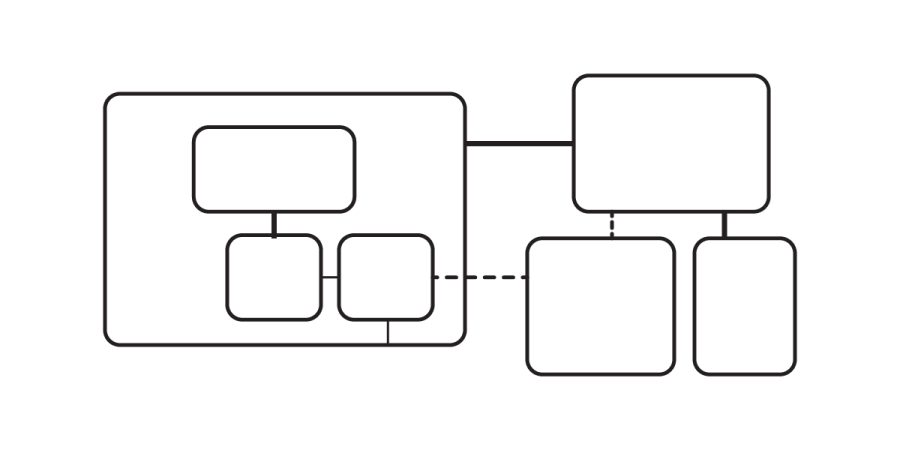
A simple black-and-white flowchart with six rectangular boxes, some connected by solid lines and others by dashed lines, illustrates programming processes, with one group of boxes enclosed in a larger rectangle.

Architectural programming is a critical early-stage process for identifying and organizing all project criteria—functional, aesthetic, structural, and budgetary—to guide design decisions. Effective programming, which focuses on problem identification rather than premature design, involves thorough documentation, client reviews, and research into typologies and similar facilities. This meticulous approach ensures a comprehensive understanding of project requirements, leading to more responsive buildings and minimizing costly changes during later design and construction phases.

The Ahwahnee Principles

black and white line drawing showing a bear with conversation bubbles, symbolizing the discussions at the ahwahnee hotel

The Ahwahnee Principles, established in 1991, advocate for sustainable urban and suburban planning to combat pollution, car dependency, and loss of open space. These principles emphasize integrated communities with diverse housing, walkable access to amenities and transit, and a strong civic core. They also promote regional land-use integration, greenbelt protection, and resource conservation through thoughtful community design and updated planning practices. This framework remains crucial for architects and planners aiming for environmentally conscious development.

Site Design & Layout, Streets, Utilities

A simple illustration showing a car on a road next to a sidewalk, featuring thoughtful site design with a streetlight and a person standing on the sidewalk.

Site layout planning is crucial for any land parcel's usefulness, requiring adequate circulation access and utility services like water, sewer, gas, electricity, and communication systems. Key considerations include road design, pedestrian circulation, and strategic placement of utilities to ensure seamless community access and functionality. Careful planning, from street widths to utility trunk lines, is essential for efficient and sustainable development.