Back in beta! Stay tuned.

planning

Programming & Space Needs
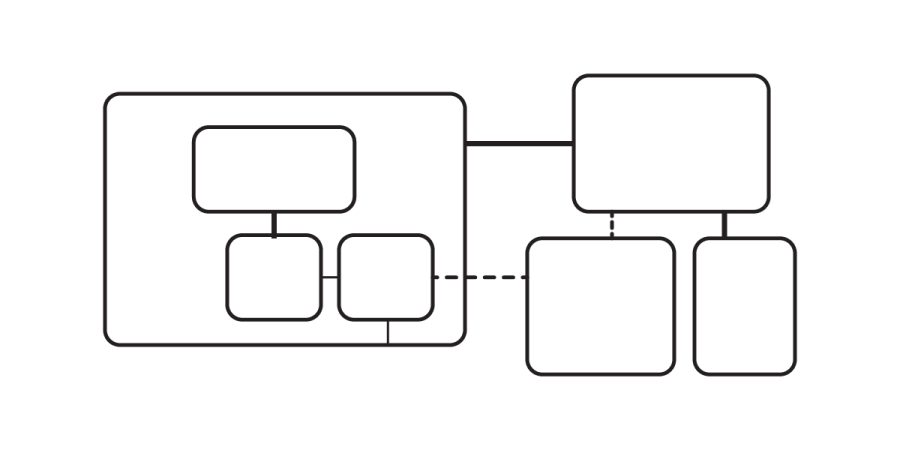
A simple black-and-white flowchart with six rectangular boxes, some connected by solid lines and others by dashed lines, illustrates programming processes, with one group of boxes enclosed in a larger rectangle.

Architectural programming is a critical early-stage process for identifying and organizing all project criteria—functional, aesthetic, structural, and budgetary—to guide design decisions. Effective programming, which focuses on problem identification rather than premature design, involves thorough documentation, client reviews, and research into typologies and similar facilities. This meticulous approach ensures a comprehensive understanding of project requirements, leading to more responsive buildings and minimizing costly changes during later design and construction phases.
The Ahwahnee Principles

black and white line drawing showing a bear with conversation bubbles, symbolizing the discussions at the ahwahnee hotel

The Ahwahnee Principles, established in 1991, advocate for sustainable urban and suburban planning to combat pollution, car dependency, and loss of open space. These principles emphasize integrated communities with diverse housing, walkable access to amenities and transit, and a strong civic core. They also promote regional land-use integration, greenbelt protection, and resource conservation through thoughtful community design and updated planning practices. This framework remains crucial for architects and planners aiming for environmentally conscious development.

Universal Design & Aging In Place

Black wheelchair accessibility icon on the left and two stick figures with canes, one wearing a skirt, holding hands on the right, represent Universal Design and Aging In Place on a white background.

Aging in place and universal design, while distinct, share significant overlap in creating inclusive environments. These approaches often necessitate substantial design changes, from larger bathrooms to specific hardware, which can impact cost and design control. However, even small, thoughtful modifications can yield a big impact, offering homeowners greater longevity in their homes and reducing the need for immediate relocation. Prioritizing future accommodations ensures spaces remain adaptable and functional for all ages and abilities.

Floor Area Ratio (FAR)

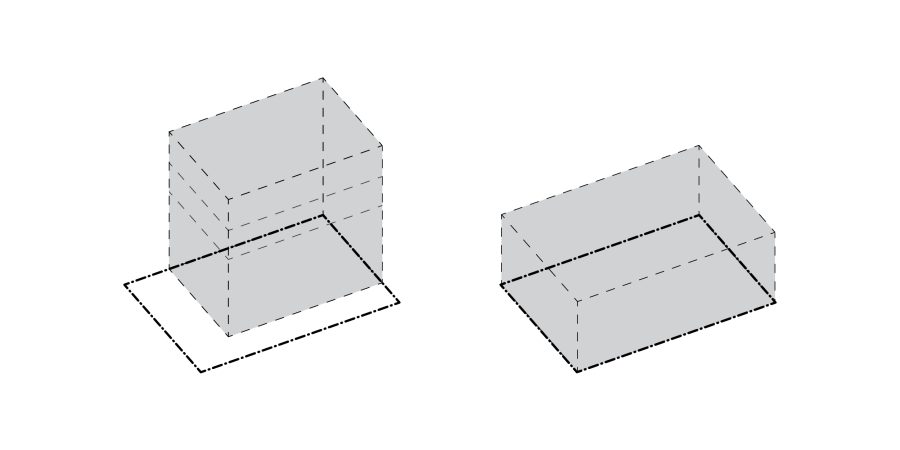
Two transparent rectangular prisms with dashed outlines are shown, illustrating concepts like Floor Area Ratio (FAR). The upright left prism has its base slightly offset to the lower left, while the right one lies flat with its base offset to the lower front.

The Floor Area Ratio (FAR) is a fundamental regulatory tool in architecture, dictating a building's overall size by defining the ratio of its total buildable floor area to its zoning lot. Different zoning areas have specific FAR rules, establishing maximum buildable areas. While FAR sets the upper limit, various factors often lead to designs below this maximum. Understanding FAR is crucial for maximizing building potential, especially in mixed-use developments and when considering potential FAR bonuses.

Occupancy Groups

Three black line icons: a group of people, a connected group with a line above, and two people with a plus sign—ideal for illustrating building classification or Occupancy Groups in fire safety contexts. All icons are on a white background.

Understanding Occupancy Groups is fundamental to compliant and safe building design. These classifications, defined by building code, dictate various critical aspects such as maximum area, height, egress, and fire protection requirements. Proper classification ensures equivalent safety across diverse uses, from factories to hospitals, and is crucial for navigating mixed-use occupancies, accessory spaces, and incidental uses within a structure.

Critical Path Method (CPM)

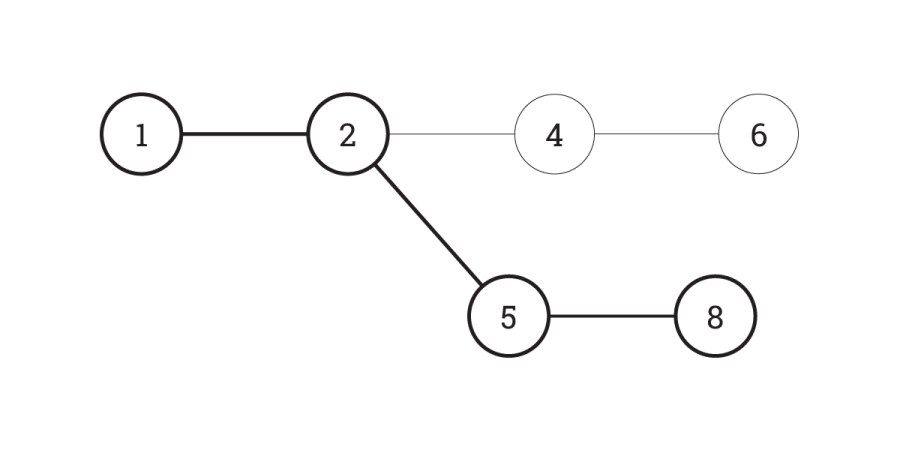
A simple CPM graph with six nodes labeled 1, 2, 4, 5, 6, and 8. In this project management diagram, node 1 connects to 2; 2 connects to 4 and 5; 4 connects to 6; 5 connects to 8. Nodes 1, 2, 5, and 8 are bold.

The Critical Path Method (CPM) is a crucial project management tool, offering a detailed network diagram to define activity sequences, durations, and interdependencies. Unlike GANTT charts, CPM excels at identifying project bottlenecks and critical activities—those whose delay directly impacts project completion. Understanding CPM allows professionals to streamline schedules, optimize resource allocation, and efficiently manage complex architectural and construction projects.

Housing Types

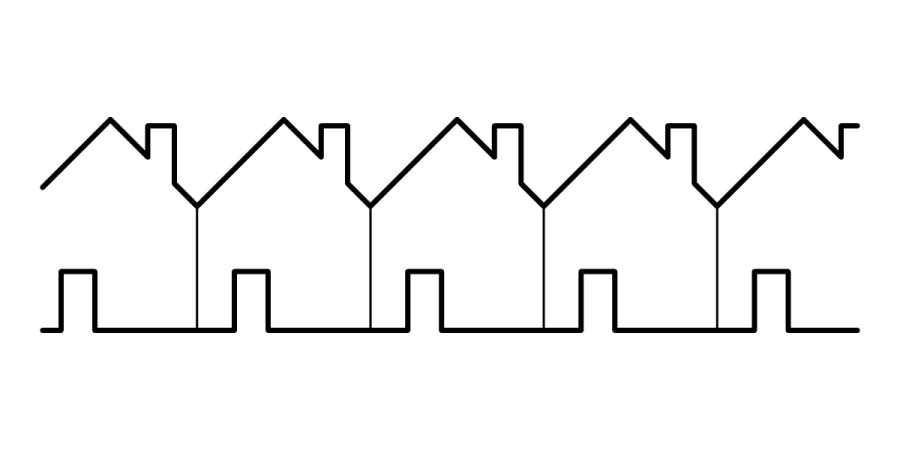
A simple black line drawing shows six connected house shapes in a row, each with a triangular roof and a rectangular door, illustrating different housing types in a continuous outline on a white background.

Urban planning hinges on housing, the most significant component of city design. Diverse housing typologies—from single-family homes to high-rise apartments—each present unique advantages and disadvantages for designers to consider. A successful urban environment thoughtfully integrates these various housing types with communal spaces and transportation methods to appeal to a broad demographic and foster a vibrant community.

Catchment Areas

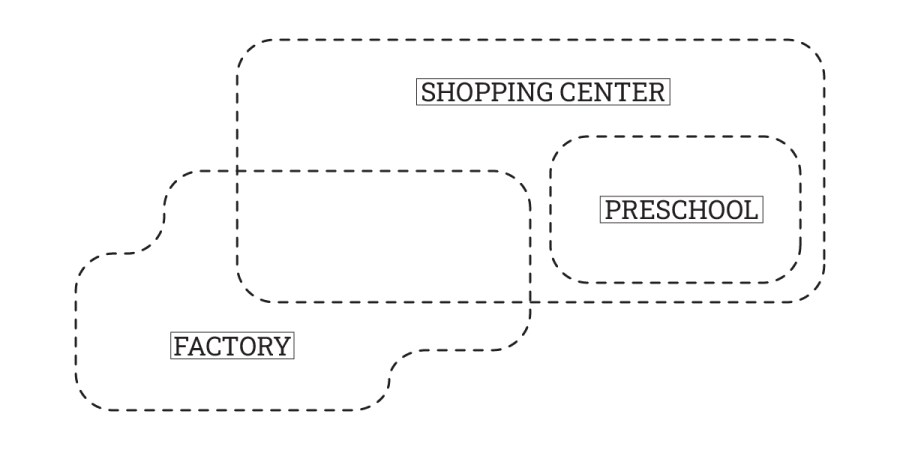
Diagram with three labeled catchment areas: FACTORY in the bottom left, SHOPPING CENTER in the upper right, and PRESCHOOL in the middle right. Each is enclosed by a dashed line, with some catchment areas overlapping.

Catchment areas, the geographic zones from which participants are drawn, are dynamic and often overlapping. They can be redefined by various factors, including infrastructure changes, economic growth, and even cultural norms influencing travel time. Understanding these ever-changing boundaries—be they local, regional, or national—is crucial for urban planners and architects, as they directly impact development, resource allocation, and community design.

Building Design Prototypes & Considerations

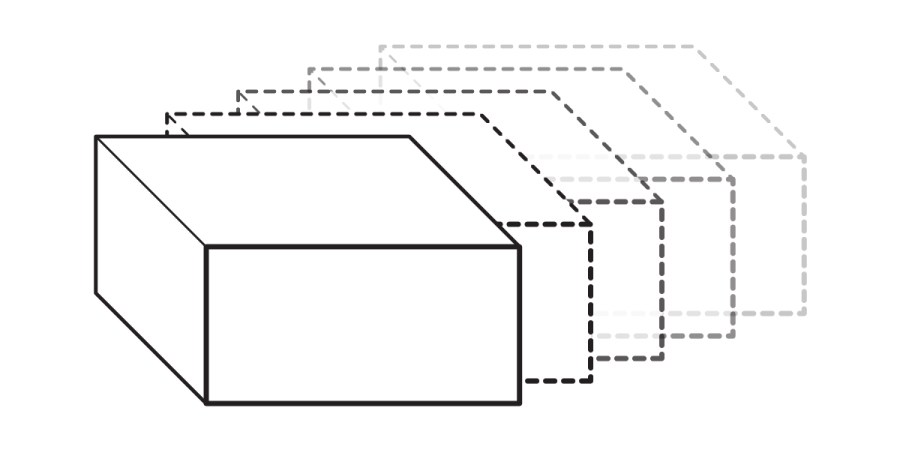
A large rectangular box in the foreground, with four smaller, progressively lighter dashed-outline boxes stacked behind it, appearing to recede into the distance—evoking the concept of design prototypes in building design.

Effective building design centers on human function, beginning with individual needs, then spatial relationships, and finally overall building dimensions. This 'programming' process is crucial for various building types, from the fundamental complexities of housing—balancing diverse functions and quiet zones—to hotels, where guest comfort and efficient service areas must be meticulously separated for profitability and experience. Understanding these foundational principles ensures the creation of long-lasting, successful architectural projects.

Slopes & Ramps

A series of nine horizontal black lines with varying angles and spacings, some solid and some dashed, are arranged on a white background. The lines become increasingly slanted from top to bottom, resembling a set of abstract slopes.

Understanding slopes and ramps is crucial for architectural design and construction. This comprehensive guide details nominal and actual dimensions for common lumber sizes, essential for accurate planning. We also delve into critical slope principles, including pitch, percentages, and degrees, alongside practical rules of thumb for drainage and unpaved surfaces. Ensure your projects meet both aesthetic and functional requirements with precise slope calculations.