Back in beta! Stay tuned.

thermal

Wall Assembly Thermal Gradient
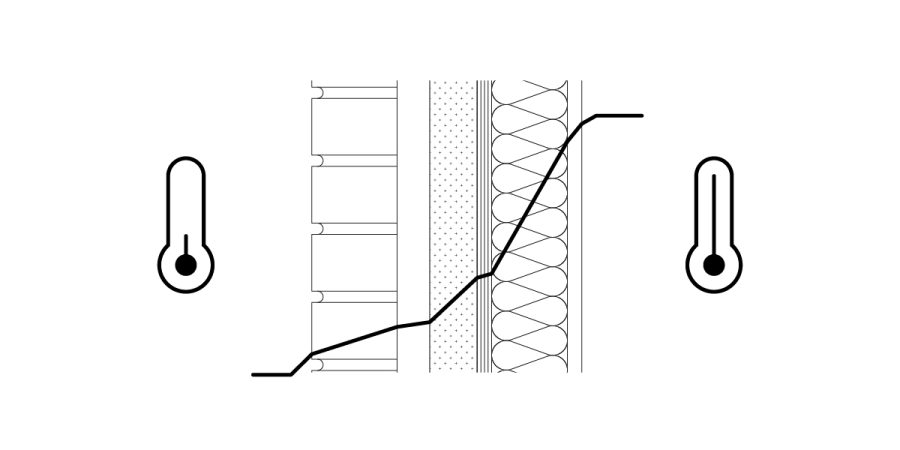
Understanding the thermal gradient within a wall assembly is crucial for effective architectural design, particularly in preventing moisture issues. This analysis involves evaluating material R-values and their impact on temperature variance, helping designers identify potential dew points. By considering factors like ASHRAE guidelines and site-specific weather, professionals can ensure assemblies meet performance requirements, even accounting for extreme conditions and internal humidity spikes.
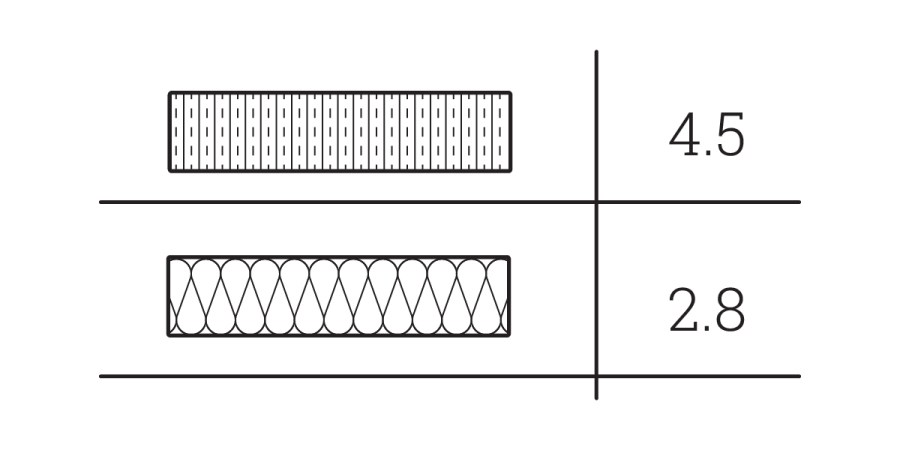
Insulation R-Values Chart

Two side-by-side rectangles, one above the other, separated by a horizontal line. The top rectangle, marked with vertical lines, is labeled 4.5 R-Value; the bottom, with a zigzag pattern, is labeled 2.8—great for an insulation diagram or R-Values chart.

This detailed chart outlines various thermal insulation types and their estimated R-values, crucial for precise space calculations in architectural design. Given the continuous advancements in insulation technology, it's vital to verify product specifications against design minimums on-site. This resource is regularly updated, and we welcome suggestions to ensure its accuracy and comprehensiveness for industry professionals.

Vapor Retarders & Air Barriers

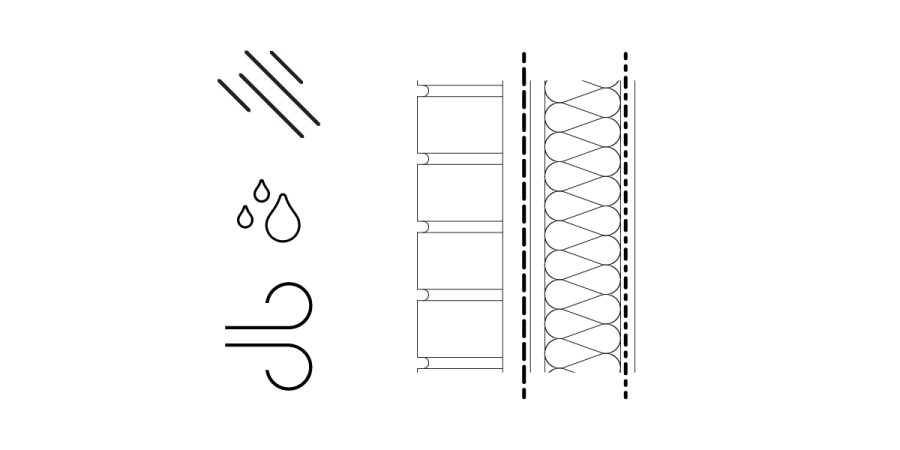
A diagram showing three diagonal lines, three water droplets, and a wind symbol on the left—illustrating air barriers and vapor retarders—with a cross-section of layered materials and two dashed lines on the right.

Water exists as solid, liquid, and gas, with vapor being a significant concern for buildings. Humidity affects comfort and moisture levels can lead to issues like mold. Proper placement of vapor retarders and air barriers is crucial to manage water vapor and prevent condensation and related problems within building cavities.