Back in beta! Stay tuned.

insulation

Wall Assembly Thermal Gradient
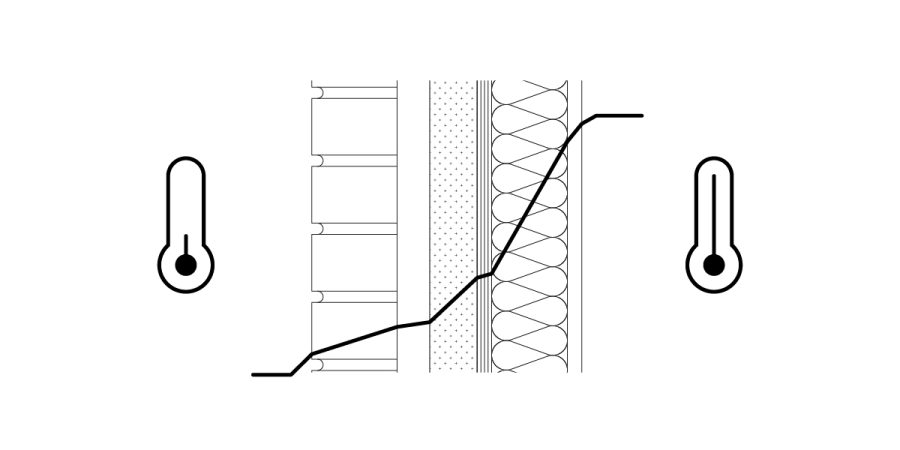
Understanding the thermal gradient within a wall assembly is crucial for effective architectural design, particularly in preventing moisture issues. This analysis involves evaluating material R-values and their impact on temperature variance, helping designers identify potential dew points. By considering factors like ASHRAE guidelines and site-specific weather, professionals can ensure assemblies meet performance requirements, even accounting for extreme conditions and internal humidity spikes.
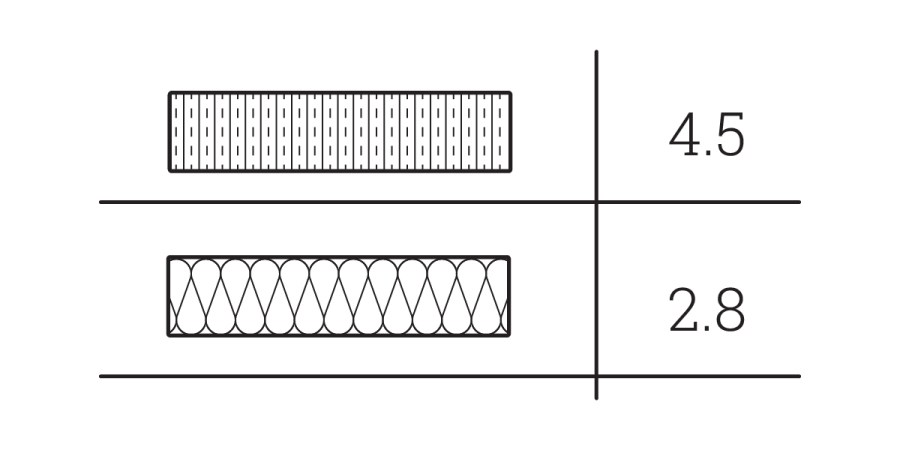
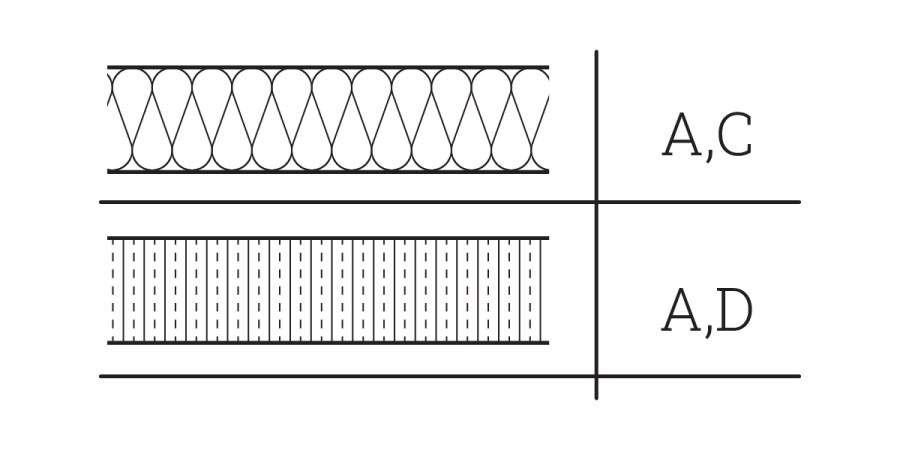
Insulation R-Values Chart

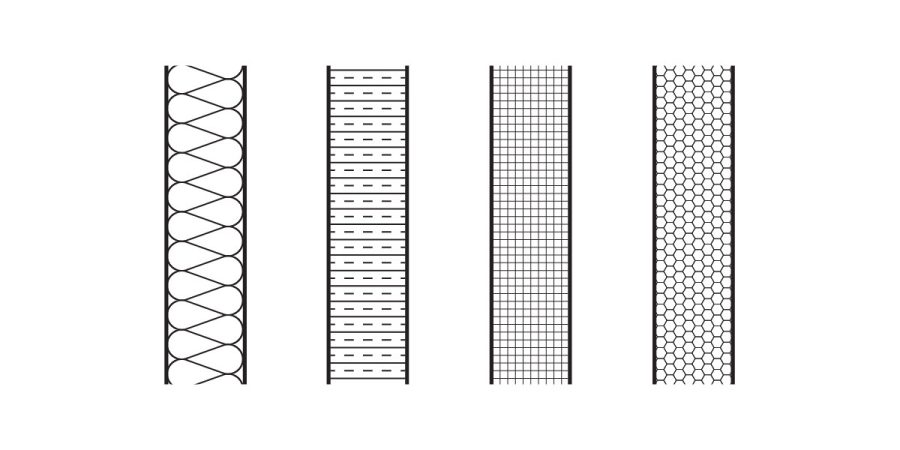
Two side-by-side rectangles, one above the other, separated by a horizontal line. The top rectangle, marked with vertical lines, is labeled 4.5 R-Value; the bottom, with a zigzag pattern, is labeled 2.8—great for an insulation diagram or R-Values chart.

This detailed chart outlines various thermal insulation types and their estimated R-values, crucial for precise space calculations in architectural design. Given the continuous advancements in insulation technology, it's vital to verify product specifications against design minimums on-site. This resource is regularly updated, and we welcome suggestions to ensure its accuracy and comprehensiveness for industry professionals.

Structural Insulated Panels (SIPS)

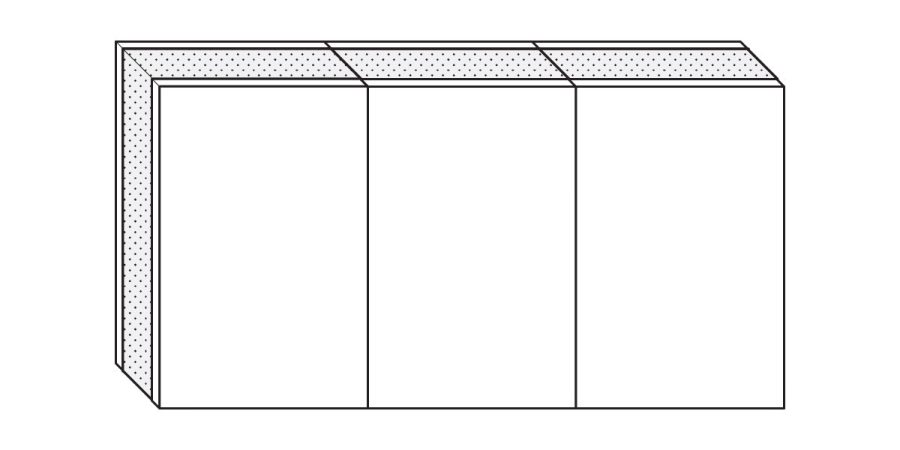
A simple line drawing of a rectangular three-panel cabinet with solid front doors and textured sides and top, viewed at an angle to show depth—design inspired by Structural Insulated Panels (SIPS) for enhanced durability.

Structural Insulated Panels (SIPs) offer a highly efficient and robust alternative to traditional construction. These composite units, typically featuring OSB skins and an EPS core, are factory-manufactured for precision and faster on-site assembly. Key advantages include reduced construction time, superior insulation with minimal thermal bridging, and enhanced structural integrity, making them a sustainable choice for modern architecture.

Concrete Formwork

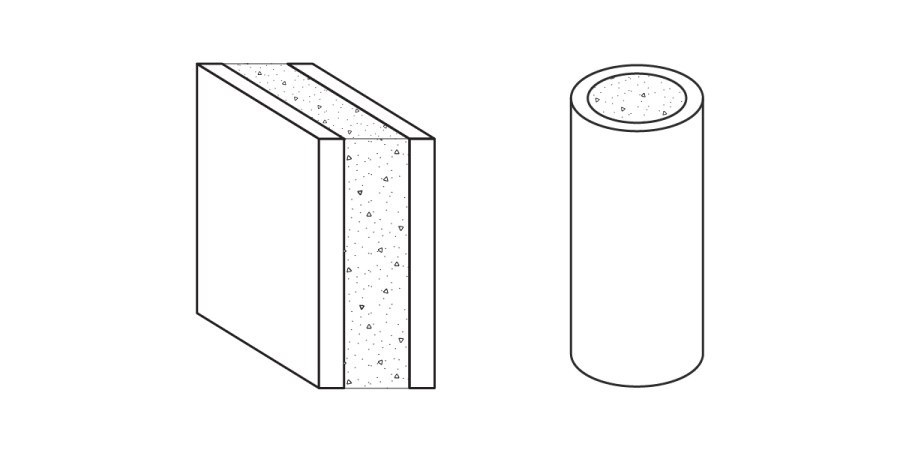
A black and white diagram shows a rectangular block with a textured inner layer and a smooth outer layer, illustrating concrete formwork, next to a solid cylinder with a small circular area visible at the top.

Formwork is essential for concrete construction, creating the temporary molds that shape wet concrete. While 3/4" plywood is standard, materials like steel and specialized coatings enhance reusability and durability. Key considerations include the formwork's strength to withstand immense concrete pressure and its constructability for easy assembly and removal. Modern advancements offer innovative solutions, such as insulated concrete forms (ICFs) that provide both structure and insulation, and specialized techniques like slip forming and flying forms that optimize efficiency for repetitive structures.