Back in beta! Stay tuned.

structural

Structural Loads on Buildings
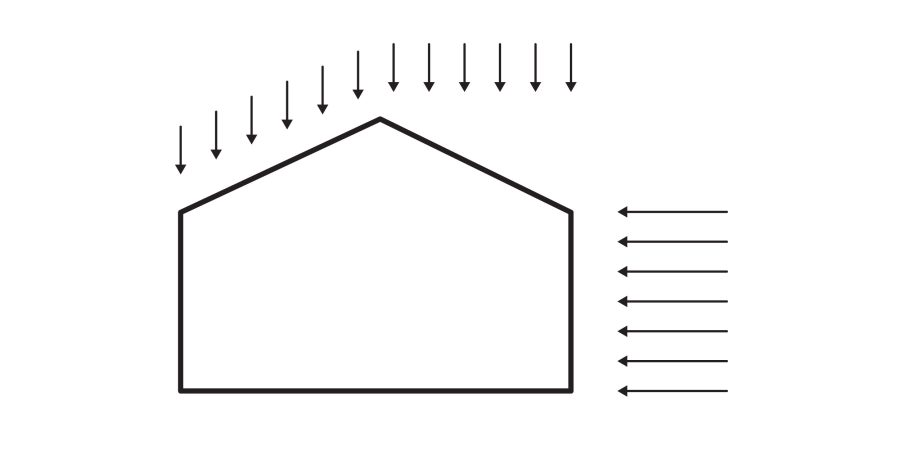
A simple outline of a house with arrows pointing downward above the roof and arrows to the right at the side, illustrating wind or airflow directions and the impact of building loads in structural engineering.

Understanding building loads is fundamental in architectural design and construction. These loads, derived from mathematical modeling and past experience, ensure safety and structural integrity. Building codes dictate minimum requirements for various loads, including static dead and live loads, as well as environmental factors like wind and snow. Designers must account for worst-case scenarios and concentrated loads, referencing code exceptions for potential reductions in loading.
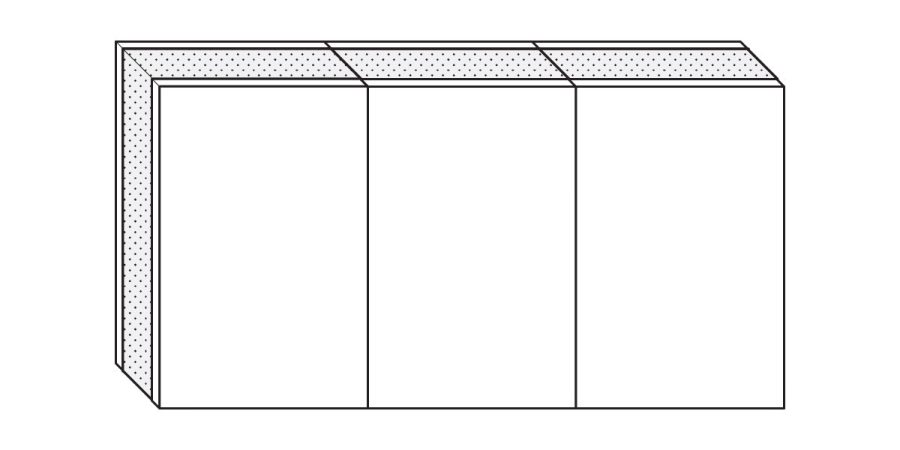
Structural Insulated Panels (SIPS)

A simple line drawing of a rectangular three-panel cabinet with solid front doors and textured sides and top, viewed at an angle to show depth—design inspired by Structural Insulated Panels (SIPS) for enhanced durability.

Structural Insulated Panels (SIPs) offer a highly efficient and robust alternative to traditional construction. These composite units, typically featuring OSB skins and an EPS core, are factory-manufactured for precision and faster on-site assembly. Key advantages include reduced construction time, superior insulation with minimal thermal bridging, and enhanced structural integrity, making them a sustainable choice for modern architecture.