Back in beta! Stay tuned.

engineering

Value Engineering (VE)

black and white line drawing showing an arrow going down from left to right with smaller money symbols indicating saving money

Value Engineering (VE) is a cost-reduction approach applied during project design phases to explore less expensive or higher-quality materials. Effective budget refinement methods include Parameter Method, Matrix Costing, and Unit Cost Method. These techniques help identify cost savings while maintaining functionality, ultimately ensuring more efficient project management and execution.

Mass Timber

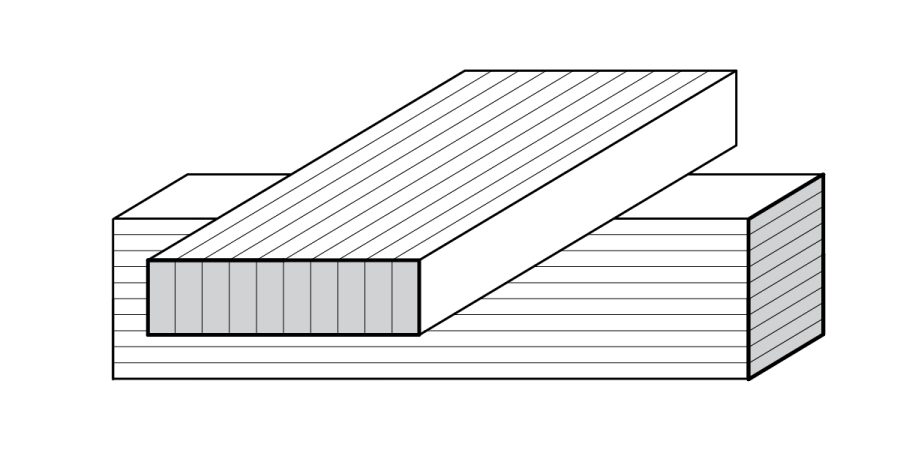
Mass Timber (MT) has rapidly evolved from a niche product to a mainstream construction option, driven by exponential growth since 2010. This engineered wood system offers precise manufacturing with CNC technology, leading to tight tolerances and faster on-site construction. Beyond its efficiency, MT buildings boast impressive fire resistance through charring and significant carbon sequestration. Understanding its diverse panel and beam products, along with key considerations like MEP coordination and acoustics, is crucial for successful integration.

Building Commissioning

A black line drawing of a bar chart is on the left and a black outline of a pie chart is on the right, both displayed on a white background—ideal for illustrating energy efficiency in building systems.

Building Commissioning ensures a building performs as intended by inspecting, testing, and verifying system performance against benchmarks. This critical process uncovers defects, optimizes equipment lifespan and ROI, and enhances operational efficiency through proper hand-offs to maintenance crews. While often overlooked due to initial costs and timing, the long-term benefits of commissioning—including verifying paid-for efficiency and ensuring LEED compliance—far outweigh minor project delays, making it a vital step in modern construction.

Structural Loads on Buildings

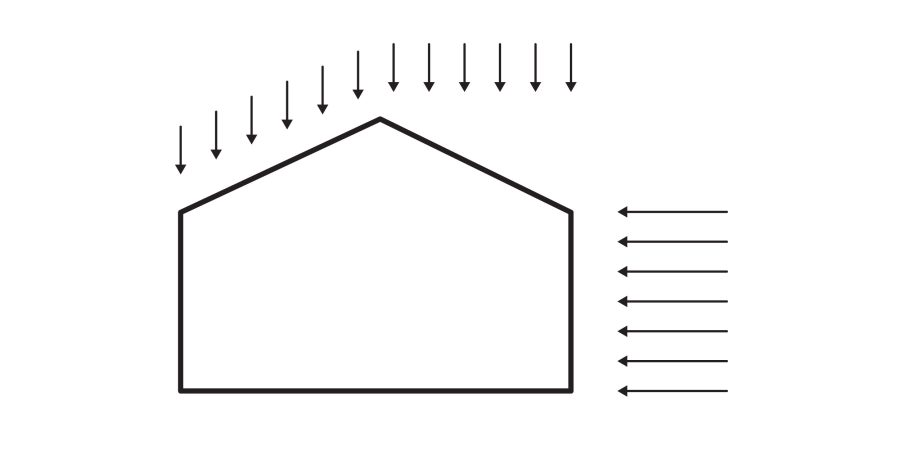
A simple outline of a house with arrows pointing downward above the roof and arrows to the right at the side, illustrating wind or airflow directions and the impact of building loads in structural engineering.

Understanding building loads is fundamental in architectural design and construction. These loads, derived from mathematical modeling and past experience, ensure safety and structural integrity. Building codes dictate minimum requirements for various loads, including static dead and live loads, as well as environmental factors like wind and snow. Designers must account for worst-case scenarios and concentrated loads, referencing code exceptions for potential reductions in loading.

Engineering Drawing Scales Printed Size

A graphic features a scale, pencil, and ruler above the word engineering in bold, black lowercase letters—simple black line drawings that evoke the precision of Engineering Drawing.

Understanding engineering scales is crucial for accurate architectural representation. This guide provides a comprehensive reference for how designs translate from digital to print, offering clear insights into various scale values and their corresponding "real" sizes. Engineers and architects alike can utilize this resource to ensure precise documentation and effective communication of large-scale projects, optimizing workflows and minimizing errors.